
 Wildlife
of Kenya
African Clawless Otter
Hyenas, Mongooses, Civets & Mustelids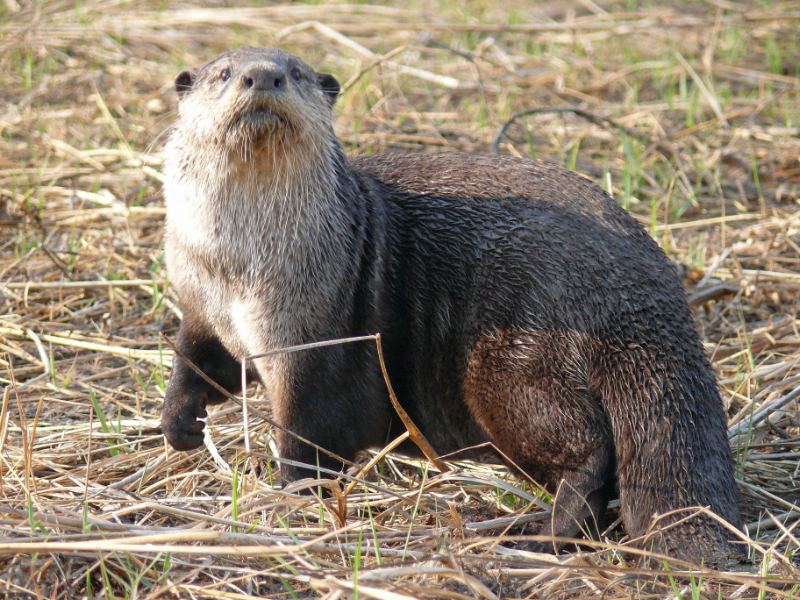
Photo: Mark Paxton of Shamvura Camp, Namibia, who releases it under the licenses below. JMK (talk) 20:54, 2 November 2013 (UTC) · CC BY-SA 3.0 (May be cropped or resized)
Lutra capensis
Conservation status: Unknown
Basic stats
Diet
Mainly crabs and other invertebrates, with some vertebrates
Habitat
Permanent fresh water in savanna, lowland forest and coastal plains
Range
Most of sub-Saharan Africa
Litter size
About 2.5 (AnAge)
Gestation period
About 63 days (AnAge)
Size
113–163cm including tail
Weight
10–36kg, most 12–21kg
The African clawless otter is the second-largest freshwater otter. Its thick, smooth fur is chestnut with almost silky underbelly fur, and white markings run down from the face to the throat and chest. The paws are partly webbed, and only digits 2, 3 and 4 of the hind feet have claws. The skull is broad and flat with a short snout, and the large flat molars are used for crushing prey. Adults are 113–163cm long including a tail of about a third of that, and weights range from 10–36kg, most averaging 12–21kg. Males are slightly larger (Wikipedia, general species account).
African clawless otters are found in permanent water in savanna and lowland forest throughout most of sub-Saharan Africa. They are mainly nocturnal, resting in holts, under large rocks or tree roots or in dense vegetation near water. In South Africa they prefer well-vegetated riverbanks and boulders or reed beds, which hold plenty of crabs. They are mostly solitary but may form family groups or male groups, and nightly movements may reach 13km. AnAge lists a gestation of 63 days (GBIF description, Mustelidae).
Quick answers
- What does the African Clawless Otter eat?
- Mainly crabs and other invertebrates, with some vertebrates
- What habitat does the African Clawless Otter live in?
- Permanent fresh water in savanna, lowland forest and coastal plains
- Where is the African Clawless Otter found?
- Most of sub-Saharan Africa
- What is the litter size of the African Clawless Otter?
- About 2.5 (AnAge)
- How long is the gestation period of the African Clawless Otter?
- About 63 days (AnAge)
- How big is the African Clawless Otter?
- 113–163cm including tail
- How much does the African Clawless Otter weigh?
- 10–36kg, most 12–21kg