
 Wildlife
of Kenya
African Black Duck
Ducks, Geese & Grebes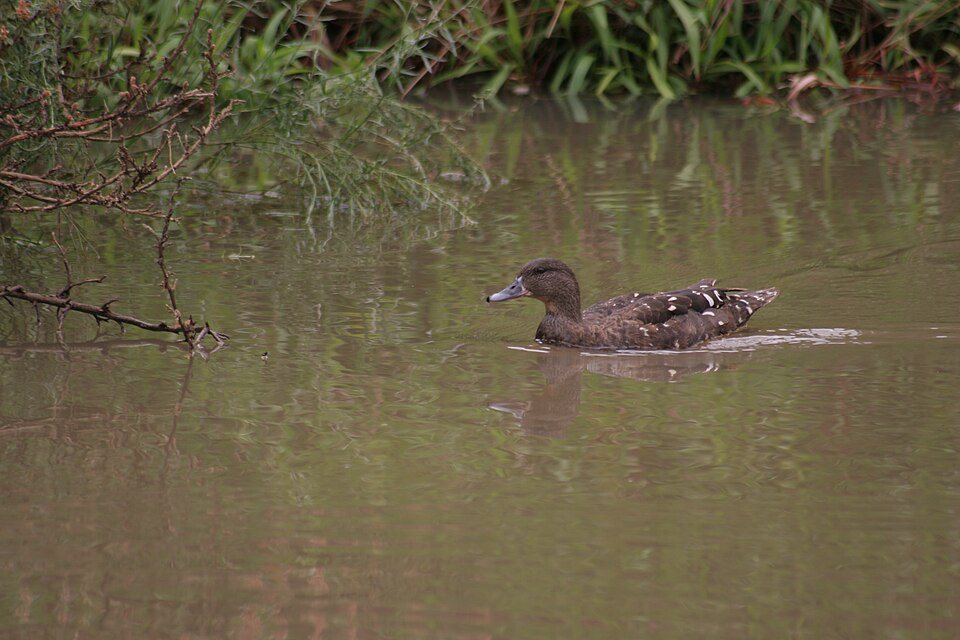
Photo: Monkey Boy from Johannesburg, South Africa · CC BY-SA 2.0 (May be cropped or resized)
Anas sparsa
Conservation status: Unknown
Basic stats
Diet
Plants, invertebrates and small aquatic animals
Habitat
Rivers and wetlands
Range
Central, eastern and southern Africa
Clutch size
4–8 eggs
Incubation period
About 30 days
Size
48–57cm
Weight
Averages about 982g
African Black Ducks are 48–57 cm long, with black plumage, strong white back markings, dark bills, orange legs and purplish-blue speculums. Males are larger than females, and AVONET records an average mass of about 982 g (Wikipedia, general species account; AVONET, Tobias et al. 2022).
African Black Ducks are shy territorial birds usually encountered in pairs or small flocks. They eat larvae, pupae, aquatic animals, plants, seeds, fish, snails and crabs; females alone incubate four to eight eggs for about 30 days and tend the young (Wikipedia, general species account; EltonTraits, Wilman et al. 2014).
Where to see African Black Duck in Kenya
GBIF records grouped by protected area. They show where the species has been reported, not that it is there now, and they are not population counts.
Recorded in 27 protected areas (1969–2026). The 8 with the most records:
- Aberdare National Park: 144 records (1978–2026)
- Mount Kenya National Reserve: 137 records (1976–2026)
- Lake Nakuru National Park: 105 records (1969–2024)
- Nairobi National Park: 72 records (1983–2024)
- Mpala Ranch: 38 records (1996–2025)
- Ol Pejeta Conservancy: 36 records (1993–2024)
- Mount Kenya National Park: 29 records (1969–2021)
- Borana Conservancy: 15 records (2003–2024)
Quick answers
- What does the African Black Duck eat?
- Plants, invertebrates and small aquatic animals
- What habitat does the African Black Duck live in?
- Rivers and wetlands
- Where is the African Black Duck found?
- Central, eastern and southern Africa
- How many eggs does the African Black Duck lay?
- 4–8 eggs
- How long are the eggs of the African Black Duck incubated?
- About 30 days
- How big is the African Black Duck?
- 48–57cm
- How much does the African Black Duck weigh?
- Averages about 982g