
 Wildlife
of Kenya
Temminck's Myotis
Bats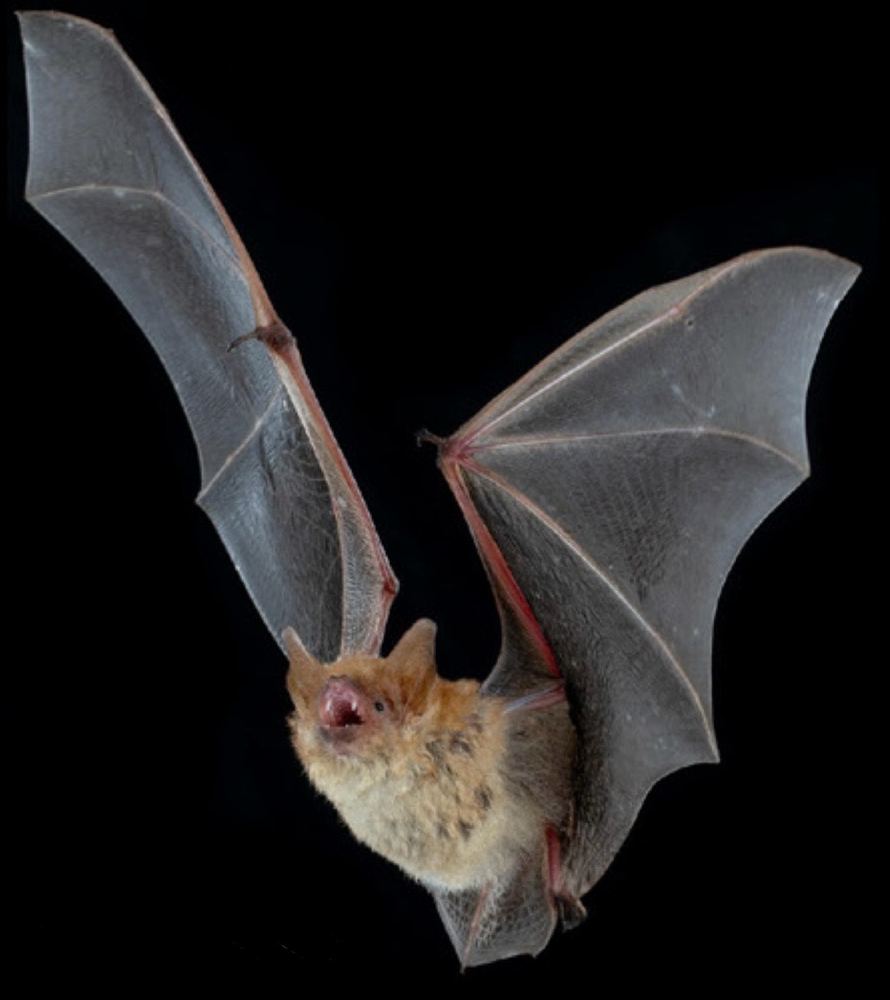
Photo: Unknown authorUnknown author · CC BY 4.0 (May be cropped or resized)
Myotis tricolor
Conservation status: Unknown
Basic stats
Diet
Aerial insects such as beetles, true bugs and flies
Habitat
Mountainous caves, savanna and shrubby vegetation
Range
Sub-Saharan Africa, from Ethiopia to South Africa
Litter size
One young per female
Size
Head and body 51–65mm
Weight
8–16g
Temminck's Myotis, also known as the Cape hairy bat, is a vesper bat of sub-Saharan Africa that looks very similar to the rufous mouse-eared bat. It has long, soft, erect fur that is orange to rufous on the back and slightly paler below, with each hair dark at the base and coppery at the tip. Its wings are broad and dark brown, its face is plain with no nose-leaf, and its moderately large brown ears have a long, narrow tragus. Its head and body measure 51–65mm, its forearm 47–53mm and its weight 8–16g. (Wikipedia, general species account; GBIF description, Vespertilionidae)
Wikipedia records it in the uplands of north-western Liberia, a few places in the Democratic Republic of Congo and Rwanda, and more widely across East Africa from Ethiopia to South Africa. It needs caves in mountainous, rocky country, though it also forages over savanna and shrubby Mediterranean-type vegetation, catching aerial insects such as beetles, true bugs and flies along vegetation edges. Groups in one cave may hold up to 1,500 bats (Wikipedia), or up to 2,000 (GBIF). Mating was reported in May by Wikipedia and in April by GBIF, with sperm stored until September and young born in November and December. (Wikipedia, general species account; GBIF description, Vespertilionidae)
Where to see Temminck's Myotis in Kenya
GBIF records grouped by protected area. They show where the species has been reported, not that it is there now, and they are not population counts.
Recorded in 3 protected areas (1948–2014).
- Menengai Crater: 71 records (1948–1963)
- Mount Elgon National Park: 62 records (1969–1972)
- Kagamega Forest: 13 records (2014)
Quick answers
- What does the Temminck's Myotis eat?
- Aerial insects such as beetles, true bugs and flies
- What habitat does the Temminck's Myotis live in?
- Mountainous caves, savanna and shrubby vegetation
- Where is the Temminck's Myotis found?
- Sub-Saharan Africa, from Ethiopia to South Africa
- What is the litter size of the Temminck's Myotis?
- One young per female
- How big is the Temminck's Myotis?
- Head and body 51–65mm
- How much does the Temminck's Myotis weigh?
- 8–16g