
 Wildlife
of Kenya
Olive-tree Warbler
Cisticolas, Warblers & White-eyes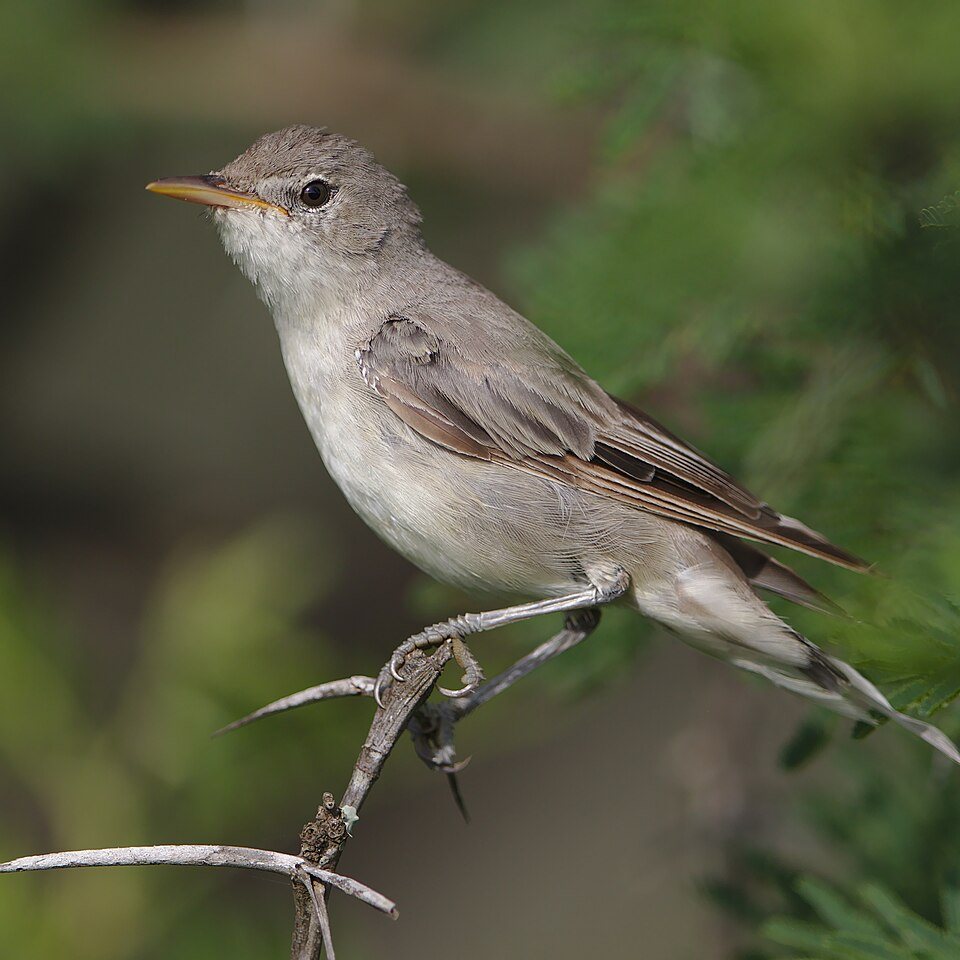
Photo: Derek Keats from Johannesburg, South Africa · CC BY 2.0 (May be cropped or resized)
Hippolais olivetorum
Conservation status: Unknown
Basic stats
Diet
Invertebrates and fruit
Habitat
Olive groves, orchards, open oak woodland and sparsely wooded grassland
Weight
18g
The Olive-tree Warbler averages about 18 g, with mean wing and tail lengths of 86.9 and 69.2 mm. It is a relatively large warbler with a long, thick bill, pale olive-gray upperparts, a light wing panel, whitish underparts and a dark long tail. Its diet centers on invertebrates, while fruit including figs is eaten in summer. The species is an insessorial migrant (AVONET, Tobias et al. 2022; EltonTraits, Wilman et al. 2014).
It breeds in southeastern Europe, the Balkans, southern Anatolia and northern Mesopotamia, then winters in eastern and southern Africa. Breeding habitat includes olive groves, orchards, open oak woodland, maquis on upland slopes and sparsely wooded grassland. The nest is a deep cup of plant material secured in a tree fork, and the clutch contains three or four eggs.
Where to see Olive-tree Warbler in Kenya
GBIF records grouped by protected area. They show where the species has been reported, not that it is there now, and they are not population counts.
Recorded in 6 protected areas (1963–2024).
- Tsavo West National Park: 180 records (1976–2024)
- Tsavo East National Park: 14 records (1963–2022)
- Samburu National Reserve: 13 records (1980–2024)
- Lake Bogoria National Reserve: 8 records (2001–2016)
- Buffalo Springs National Reserve: 7 records (1987–2024)
- Amboseli National Park: 5 records (1984–2024)
Quick answers
- What does the Olive-tree Warbler eat?
- Invertebrates and fruit
- What habitat does the Olive-tree Warbler live in?
- Olive groves, orchards, open oak woodland and sparsely wooded grassland
- How much does the Olive-tree Warbler weigh?
- 18g