
 Wildlife
of Kenya
Olive-bellied Sunbird
Sunbirds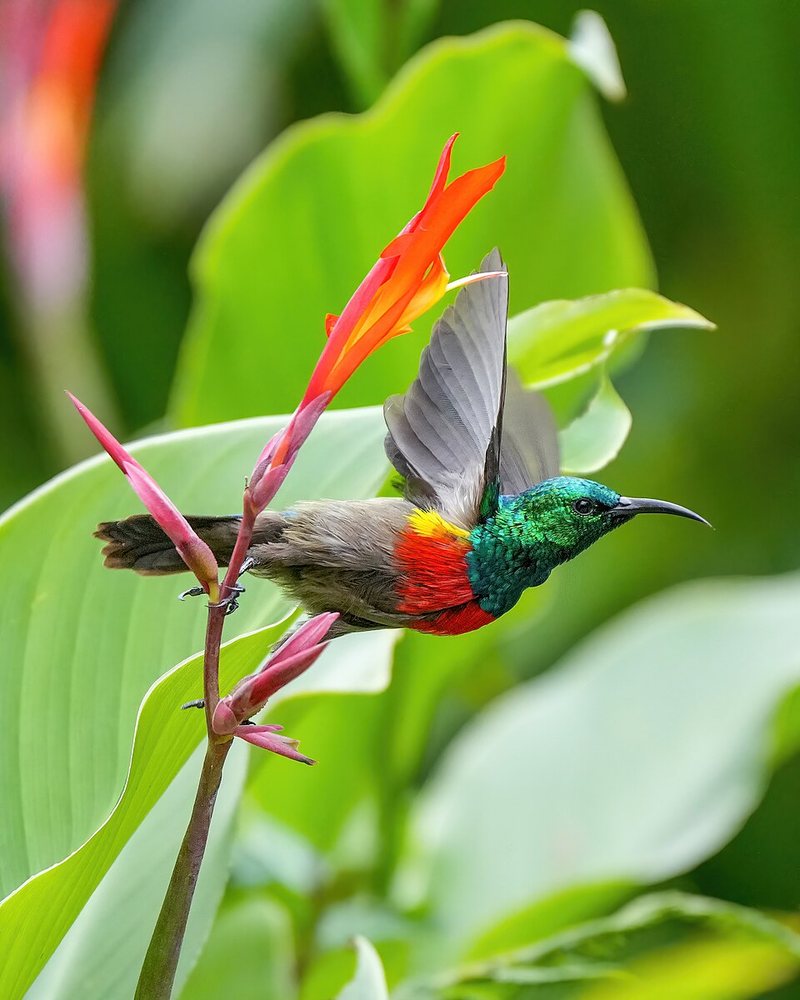
Photo: Giles Laurent · CC BY-SA 4.0 (May be cropped or resized)
Cinnyris chloropygius
Conservation status: Unknown
Basic stats
Diet
Caterpillars, beetles, spiders, nectar, flowers and seeds
Habitat
Canopy and flowering vegetation
Range
Tropical Africa
The Olive-bellied Sunbird ranges across tropical Africa, especially western and central Africa, and also occurs in the south and east. Males have a metallic green head, back and throat, a blue rump and a narrow blue breast band above a scarlet patch. Females have olive-brown upperparts and yellow-washed underparts. (Wikipedia, general species account)
It forages singly or in pairs, and sometimes in groups of about six birds. It takes nectar and plant material alongside spiders, beetles and caterpillars. The male defends a territory and drives away conspecifics and tiny sunbirds. The nest is made from grasses, bark strips and leaves, and the female alone incubates. (Wikipedia, general species account)
Where to see Olive-bellied Sunbird in Kenya
GBIF records grouped by protected area. They show where the species has been reported, not that it is there now, and they are not population counts.
Recorded in 3 protected areas (1981–2024).
- Kagamega Forest: 560 records (1981–2024)
- Ruma National Park: 4 records (2018–2020)
- South Nandi Forest Reserve: 4 records (2024)
Quick answers
- What does the Olive-bellied Sunbird eat?
- Caterpillars, beetles, spiders, nectar, flowers and seeds
- What habitat does the Olive-bellied Sunbird live in?
- Canopy and flowering vegetation
- Where is the Olive-bellied Sunbird found?
- Tropical Africa