
 Wildlife
of Kenya
Northern Gray-headed Sparrow
Other Songbirds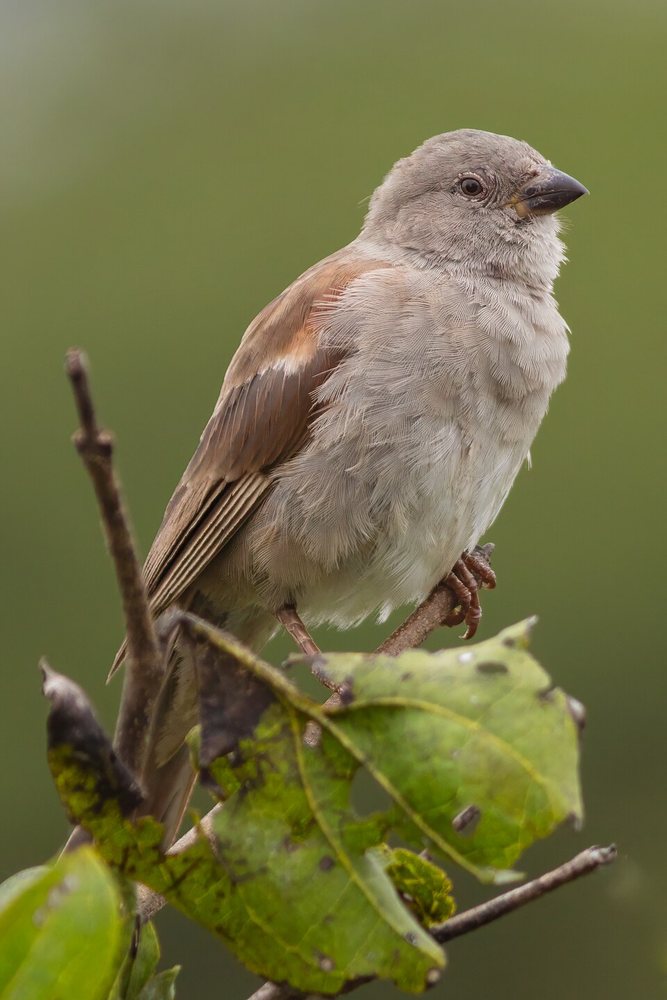
Photo: Diego Delso · CC BY-SA 4.0 (May be cropped or resized)
Passer griseus
Conservation status: Unknown
The northern gray-headed sparrow uses many open settings, including open woodland and human settlements, often filling the role that house sparrows occupy in Eurasia. Adults have a pale-grey head with a white moustache stripe, pale-brown upperparts, whitish underside and chestnut wings, each marked by a small white spot at the shoulder. Sexes are alike; young birds are duller and lack the white wing mark. Three subspecies differ in plumage tone, especially head darkness. (Wikipedia, general species account)
It is mostly resident, with some seasonal movement. Outside breeding, flocks may reach 50 birds. It places a cup-shaped nest in a tree, thatch structure or a vacated nest of another bird; clutches hold two to four eggs. Seeds and grain form the main diet, but it readily takes insects, including termites, especially when feeding young. (Wikipedia, general species account)
Where to see Northern Gray-headed Sparrow in Kenya
GBIF records grouped by protected area. They show where the species has been reported, not that it is there now, and they are not population counts.
Recorded in 38 protected areas (1963–2026). The 8 with the most records:
- Masai Mara: 681 records (1973–2024)
- Kagamega Forest: 392 records (1972–2024)
- Lake Nakuru National Park: 332 records (1973–2024)
- Mara Triangle: 218 records (1979–2024)
- Masai Moran Conservancy: 142 records (2000–2024)
- Naboisho Conservancy: 49 records (2016–2024)
- Mara North Conservancy: 46 records (1977–2024)
- Soysambu Conservancy: 36 records (1992–2024)