
 Wildlife
of Kenya
Nile Crocodile
Nile Crocodile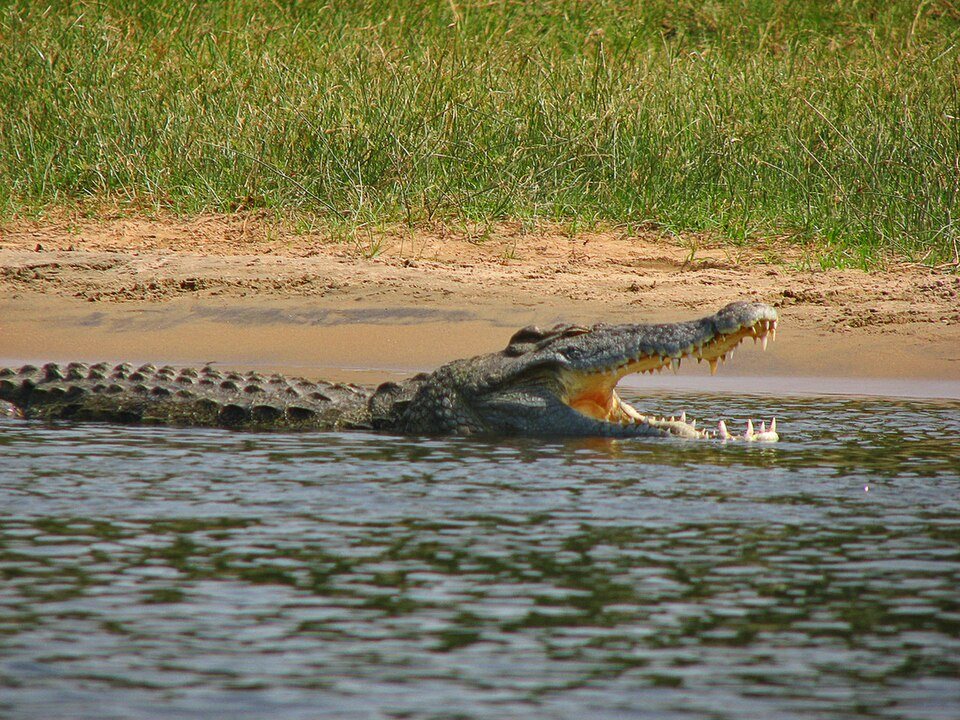
Photo: Tim Muttoo · CC BY-SA 2.0 (May be cropped or resized)
Crocodylus niloticus
Conservation status: Unknown
Basic stats
Diet
Fish and other vertebrates; large adults can take sizeable mammals
Habitat
Rivers, lakes, marshes and reservoirs
Range
Much of sub-Saharan Africa, including Kenya
Clutch size
Several dozen eggs in a bank nest
Size
Most adults 2.5–4m; large males can exceed 5m
The Nile crocodile is a large, heavily armoured crocodilian with a broad snout, powerful tail and olive to dark brown upperparts. Young animals are more strongly banded and spotted than old adults. The fourth lower tooth remains visible when the mouth is closed, distinguishing true crocodiles from alligators. Adults often bask conspicuously on banks (Reptile Database distribution; Wikipedia, general species account).
It is an ambush predator that waits almost submerged and feeds on fish, birds and mammals. Females dig nests above the waterline and guard both eggs and hatchlings. In Kenya it is prominent in the Mara River, Lake Turkana and Mzima Springs, with additional populations in suitable rivers and lakes. It must always be watched from a safe distance. No sourced Kenya national status is recorded; status is unknown.
Quick answers
- What does the Nile Crocodile eat?
- Fish and other vertebrates; large adults can take sizeable mammals
- What habitat does the Nile Crocodile live in?
- Rivers, lakes, marshes and reservoirs
- Where is the Nile Crocodile found?
- Much of sub-Saharan Africa, including Kenya
- How many eggs does the Nile Crocodile lay?
- Several dozen eggs in a bank nest
- How big is the Nile Crocodile?
- Most adults 2.5–4m; large males can exceed 5m