
 Wildlife
of Kenya
Kenrick's Starling
Starlings & Oxpeckers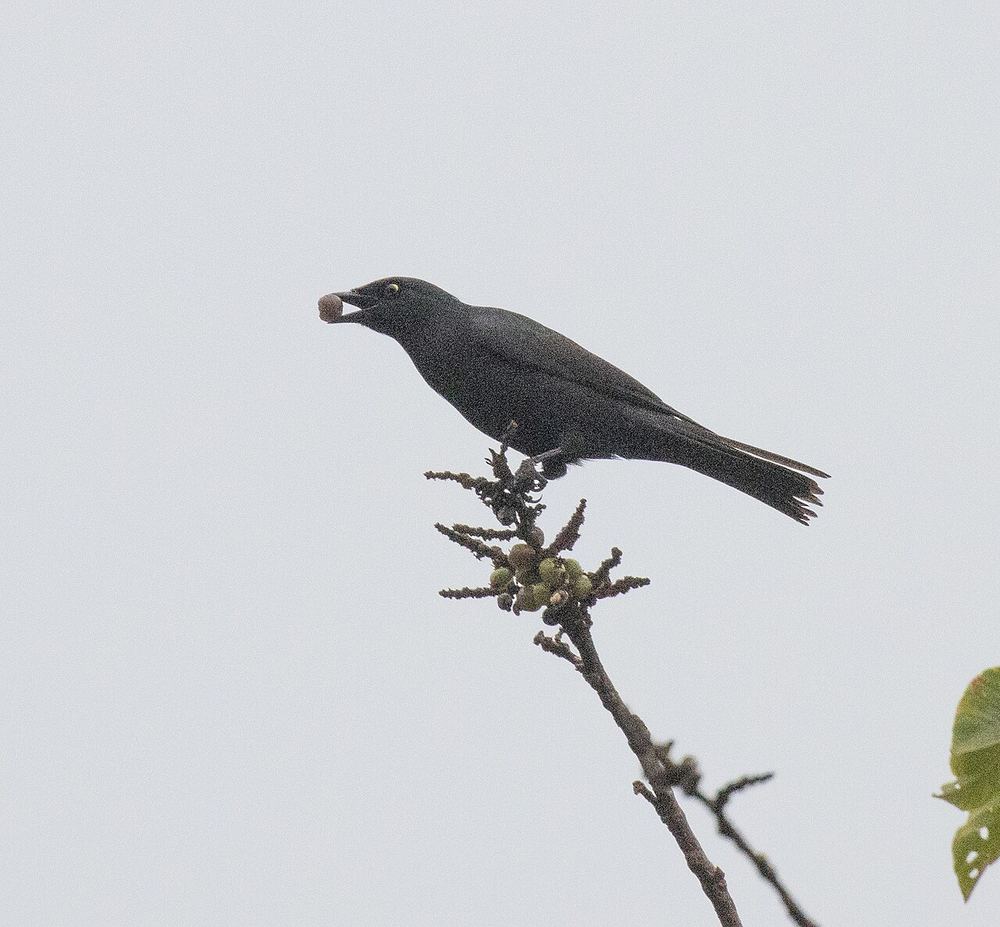
Photo: avocat · CC BY 4.0 (May be cropped or resized)
Poeoptera kenricki
Conservation status: Unknown
Basic stats
Diet
Fruit, insects and other invertebrates
Habitat
Montane forest and woodland
Range
Eastern Africa
Kenrick's Starling is a medium-sized starling with dark plumage and the compact, strong shape typical of its family. The species is associated with eastern African uplands, where woodland shade and fruiting trees provide cover and food. Its dark plumage and forest setting are useful clues when several starlings are present at a distance (Wikipedia, general species account; AVONET, Tobias et al. 2022).
It uses montane forest and woodland in eastern Africa. The diet includes fruit, insects and other invertebrates, allowing birds to switch between plant food and animal prey as they move through the canopy and understory. Kenrick's Starling is therefore a mixed feeder of eastern African montane woodland, using both fruiting trees and leafy cover (Wikipedia, general species account; EltonTraits, Wilman et al. 2014).
Where to see Kenrick's Starling in Kenya
GBIF records grouped by protected area. They show where the species has been reported, not that it is there now, and they are not population counts.
Recorded in 3 protected areas (1930–2025).
- Upper Imenti Forest Reserve: 60 records (1991–2025)
- Mount Kenya National Reserve: 22 records (1995–2024)
- Mount Kenya National Park: 3 records (1930–2017)
Quick answers
- What does the Kenrick's Starling eat?
- Fruit, insects and other invertebrates
- What habitat does the Kenrick's Starling live in?
- Montane forest and woodland
- Where is the Kenrick's Starling found?
- Eastern Africa