
 Wildlife
of Kenya
Gray Crowned-Crane
Cranes, Rails & Bustards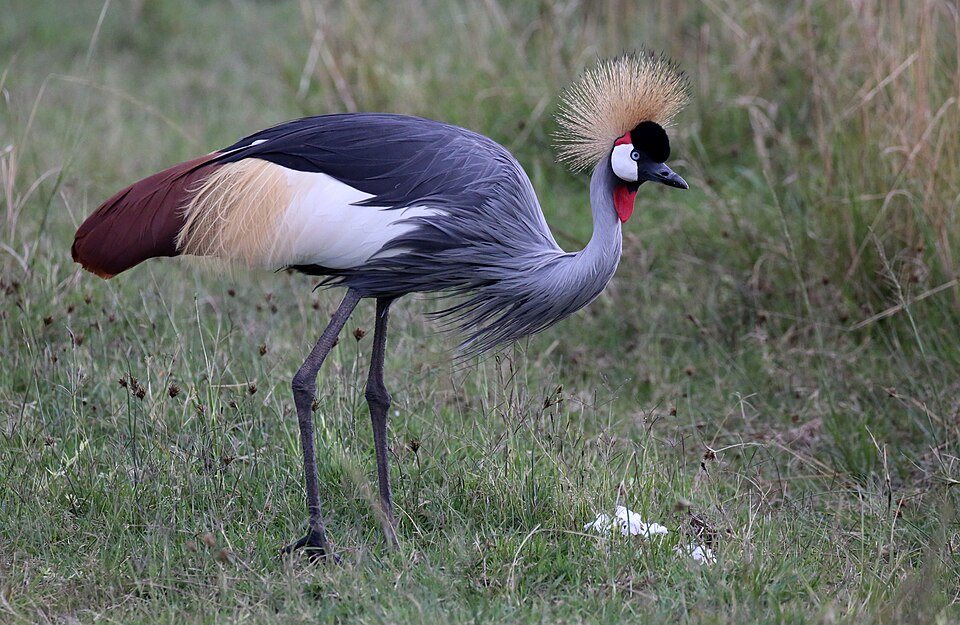
Photo: flowcomm · CC BY 2.0 (May be cropped or resized)
Balearica regulorum
Conservation status: Unknown
Basic stats
Diet
Seeds, grasses, insects and other small animals
Habitat
Wet grassland, marsh edges and cultivated country
Clutch size
Usually 2–3 eggs
Size
About 1m tall
The gray crowned-crane is unmistakable: a grey body, white wing panels, black-and-gold wings, a red throat pouch and a crown of stiff golden feathers. The face is white with a red patch above, and long dark legs allow it to forage in wet ground. Unlike most cranes it can perch in trees because the hind toe is long (AVONET, Tobias et al. 2022; Wikipedia, general species account).
Pairs perform elaborate dances with bows, jumps and wing spreading, but dancing is not limited to courtship. They feed in wetlands and grasslands on seeds, plants and small animals and often use farmland. In Kenya they can be seen around Amboseli, Lake Naivasha, Lake Nakuru and western wetlands. Wetland drainage and disturbance are important concerns, but no sourced Kenya national category has been recorded here; status is unknown.
Where to see Gray Crowned-Crane in Kenya
GBIF records grouped by protected area. They show where the species has been reported, not that it is there now, and they are not population counts.
Recorded in 98 protected areas (1930–2026). The 8 with the most records:
- Masai Mara: 2,491 records (1969–2026)
- Lake Nakuru National Park: 1,282 records (1969–2024)
- Mara Triangle: 946 records (1971–2026)
- Amboseli National Park: 588 records (1973–2026)
- Ol Pejeta Conservancy: 474 records (1989–2026)
- Nairobi National Park: 416 records (1973–2026)
- Lewa Wildlife Conservancy: 300 records (1996–2024)
- Buffalo Springs National Reserve: 257 records (1977–2026)
Quick answers
- What does the Gray Crowned-Crane eat?
- Seeds, grasses, insects and other small animals
- What habitat does the Gray Crowned-Crane live in?
- Wet grassland, marsh edges and cultivated country
- How many eggs does the Gray Crowned-Crane lay?
- Usually 2–3 eggs
- How big is the Gray Crowned-Crane?
- About 1m tall