
 Wildlife
of Kenya
Common Ostrich
Ostriches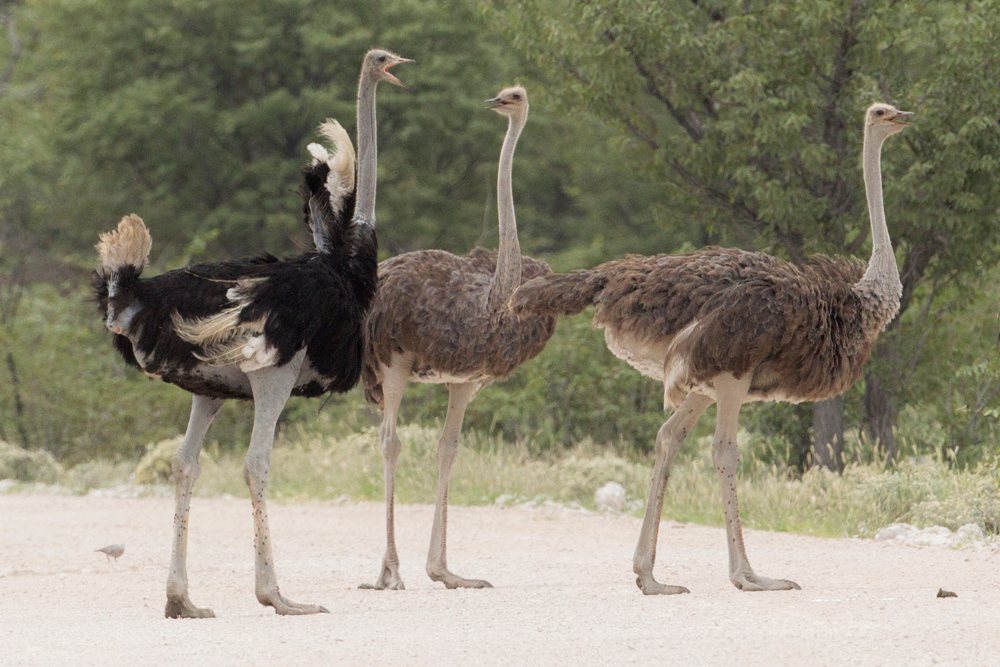
Photo: Yathin S Krishnappa · CC BY-SA 4.0 (May be cropped or resized)
Struthio camelus
Conservation status: Unknown
Basic stats
Diet
Seeds, leaves, flowers and fruit, with some invertebrates
Habitat
Open savanna, grassland and semi-arid plains
Clutch size
Several females lay in a communal nest
Size
Adults may stand 1.7–2.8m
Weight
Males can exceed 100kg
The common ostrich is the world's largest living bird, a flightless runner with a long bare neck, powerful two-toed legs and a small head. Adult males are mostly black with white wing and tail plumes; females and young are grey-brown. Long legs and elastic tendons make sustained fast running across open ground possible (AVONET, Tobias et al. 2022; Wikipedia, general species account).
Ostriches feed in open country, taking plant material and invertebrates and often associating with grazing mammals. A territorial male mates with several females, which lay in a shared scrape; the principal female and male incubate in turn. In Kenya they are widespread in the Mara, Amboseli, Tsavo, Nairobi and the north. The guide has no sourced Kenya national status, so it displays unknown.
Where to see Common Ostrich in Kenya
GBIF records grouped by protected area. They show where the species has been reported, not that it is there now, and they are not population counts.
Recorded in 119 protected areas (1961–2026). The 8 with the most records:
- Masai Mara: 4,352 records (1969–2026)
- Nairobi National Park: 3,317 records (1961–2026)
- Mara Triangle: 1,345 records (1971–2024)
- Amboseli National Park: 562 records (1976–2026)
- Tsavo West National Park: 560 records (1966–2024)
- Lake Nakuru National Park: 476 records (1969–2024)
- Naboisho Conservancy: 195 records (1993–2024)
- Tsavo East National Park: 182 records (1969–2026)
Quick answers
- What does the Common Ostrich eat?
- Seeds, leaves, flowers and fruit, with some invertebrates
- What habitat does the Common Ostrich live in?
- Open savanna, grassland and semi-arid plains
- How many eggs does the Common Ostrich lay?
- Several females lay in a communal nest
- How big is the Common Ostrich?
- Adults may stand 1.7–2.8m
- How much does the Common Ostrich weigh?
- Males can exceed 100kg