
 Wildlife
of Kenya
Cape Porcupine
Rodents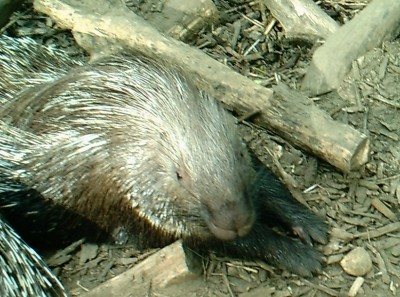
Photo: MarianSz · CC BY-SA 3.0 (May be cropped or resized)
Hystrix africaeaustralis
Conservation status: Unknown
Basic stats
Diet
Mostly plant material: fruits, roots, tubers, bulbs and bark
Habitat
Sea level to 2000m; rarely dense forest, the driest deserts or swamps
Range
Southern and central Africa, reaching southern Kenya, Uganda and Congo
Size
Head-body 63–81cm; tail 11–20cm
Weight
10–24kg, up to 30kg
The Cape porcupine, also known as the Cape crested or South African porcupine, ranks among Africa's biggest rodents and is one of the largest porcupines in the world. Short white spines running down the centre of the rump set it apart from the crested porcupine, which it otherwise resembles closely. Adults measure 63–81cm from head to tail base, with an 11–20cm tail, and weigh 10–24kg, with exceptionally large individuals up to 30kg. The body is covered in long spines and thicker defensive quills up to 30cm long, with bristly blackish or brownish fur, and hollow tail spines rattle to deter predators. Females carry two pairs of teats (Wikipedia, general species account).
It is distributed across southern and central Africa, reaching southern Kenya, Uganda and the Congo at the northern edge of its range. It occupies a wide range of habitats from sea level to 2000m, but rarely occurs in dense forest or the most arid deserts, and is absent from swampland. Their diet is largely vegetable: fruit, roots, tubers, bulbs and bark. They live in family groups of an adult pair with subadult and juvenile offspring, and groups of up to 14 have been seen sharing a single burrow. Monogamous, they stay together, and mature offspring may remain in their natal group when dispersal is limited (GBIF description, Hystricidae; Wikipedia, general species account).
Quick answers
- What does the Cape Porcupine eat?
- Mostly plant material: fruits, roots, tubers, bulbs and bark
- What habitat does the Cape Porcupine live in?
- Sea level to 2000m; rarely dense forest, the driest deserts or swamps
- Where is the Cape Porcupine found?
- Southern and central Africa, reaching southern Kenya, Uganda and Congo
- How big is the Cape Porcupine?
- Head-body 63–81cm; tail 11–20cm
- How much does the Cape Porcupine weigh?
- 10–24kg, up to 30kg