
 Wildlife
of Kenya
Cape Eagle-Owl
Owls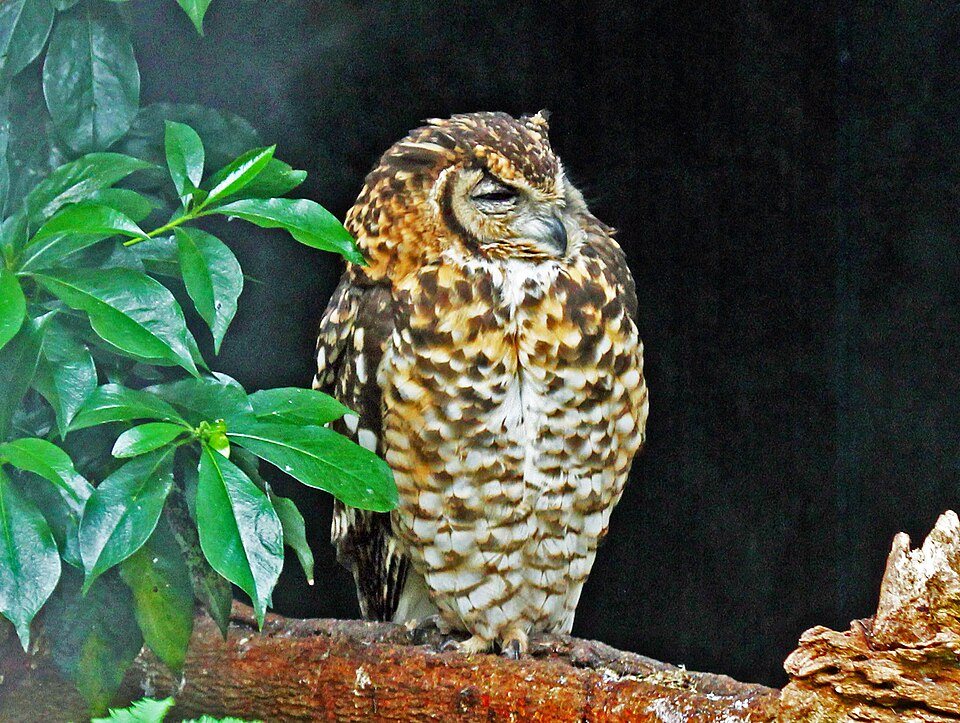
Photo: DickDaniels (http://theworldbirds.org/) · CC BY-SA 3.0 (May be cropped or resized)
Bubo capensis
Conservation status: Unknown
Basic stats
Diet
Mostly mammals
Habitat
Rocky mountains and wooded gullies
Range
Southern and eastern Africa
Clutch size
Usually 2 eggs
Incubation period
About 34–38 days
Size
About 46–61cm
Weight
About 905–1,800g
Cape Eagle-Owls are imposing, ear-tufted owls about 46–61 cm long. Males weigh 905–1,387 g and larger females 1,240–1,800 g. Dark-brown upperparts, boldly blotched underparts, a dark-framed tawny facial disc and yellow to orange eyes distinguish them. The male advertises with an explosive hoot followed by a softer note, while alarmed birds produce repeated barking calls (Wikipedia, general species account; Collins Birds of the World).
Mountain slopes, rocky valleys, cliffs, wooded gullies and nearby grassland shelter Cape Eagle-Owls from sea level to about 2,500 m in southern and eastern Africa. At night they glide down from prominent perches onto mammals, especially rodents and hyraxes, while birds, reptiles, frogs and large invertebrates are secondary prey. A sheltered ledge, cave, crevice or ground scrape usually holds two eggs, incubated by the female for 34–38 days as the male brings food (Wikipedia, general species account; EltonTraits, Wilman et al. 2014).
Quick answers
- What does the Cape Eagle-Owl eat?
- Mostly mammals
- What habitat does the Cape Eagle-Owl live in?
- Rocky mountains and wooded gullies
- Where is the Cape Eagle-Owl found?
- Southern and eastern Africa
- How many eggs does the Cape Eagle-Owl lay?
- Usually 2 eggs
- How long are the eggs of the Cape Eagle-Owl incubated?
- About 34–38 days
- How big is the Cape Eagle-Owl?
- About 46–61cm
- How much does the Cape Eagle-Owl weigh?
- About 905–1,800g