
 Wildlife
of Kenya
Black Bishop
Weavers, Waxbills & Whydahs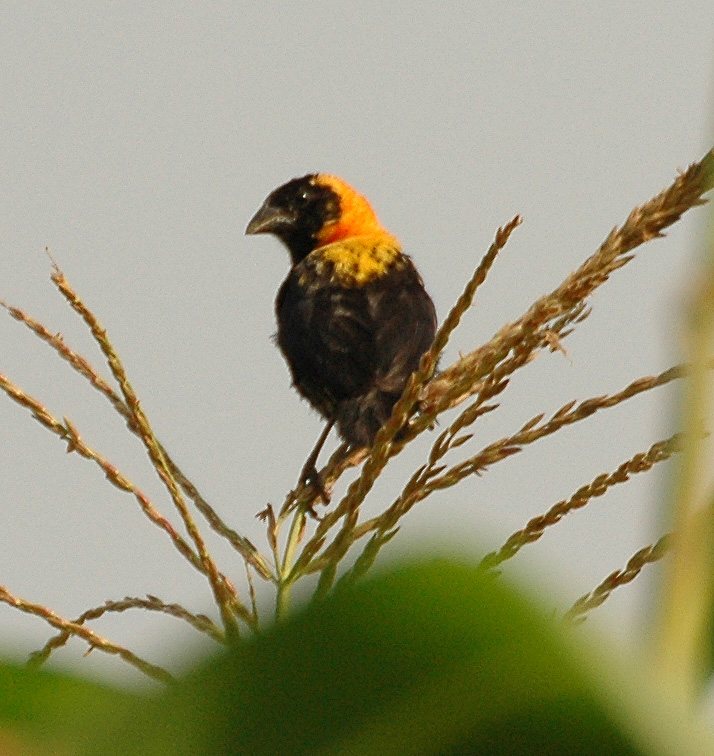
Photo: Aviceda · CC BY-SA 3.0 (May be cropped or resized)
Euplectes gierowii
Conservation status: Unknown
Basic stats
Diet
Seeds and insects
Habitat
Grassland, marsh edges and cultivated open country
Range
West and central Africa
Size
About 13cm
The Black Bishop is a sexually dimorphic African weaver. Breeding males are predominantly black with contrasting red or chestnut shoulder and head markings, whereas females and nonbreeding birds are brown and streaked. It occurs in open grassland and wetter country, including marsh margins and cultivated areas, across western and central Africa. The species therefore uses both natural and managed open landscapes. (Wikipedia, general species account)
Seeds are the principal food and insects are also taken. The birds forage socially, and males establish display territories and build woven nests to attract females. Its nesting biology remains incompletely documented. (Wikipedia, general species account) (EltonTraits, Wilman et al. 2014)
Where to see Black Bishop in Kenya
GBIF records grouped by protected area. They show where the species has been reported, not that it is there now, and they are not population counts.
Recorded in 4 protected areas (1972–2024).
- Shompole Community Conservancy: 15 records (2009–2024)
- Kagamega Forest: 14 records (1972–2024)
- Shompole Conservancy core area and grass bank: 13 records (2009–2024)
- Olkiramatian Community Conservancy: 9 records (1993–2024)
Quick answers
- What does the Black Bishop eat?
- Seeds and insects
- What habitat does the Black Bishop live in?
- Grassland, marsh edges and cultivated open country
- Where is the Black Bishop found?
- West and central Africa
- How big is the Black Bishop?
- About 13cm