
 Wildlife
of Kenya
Zebra Waxbill
Weavers, Waxbills & Whydahs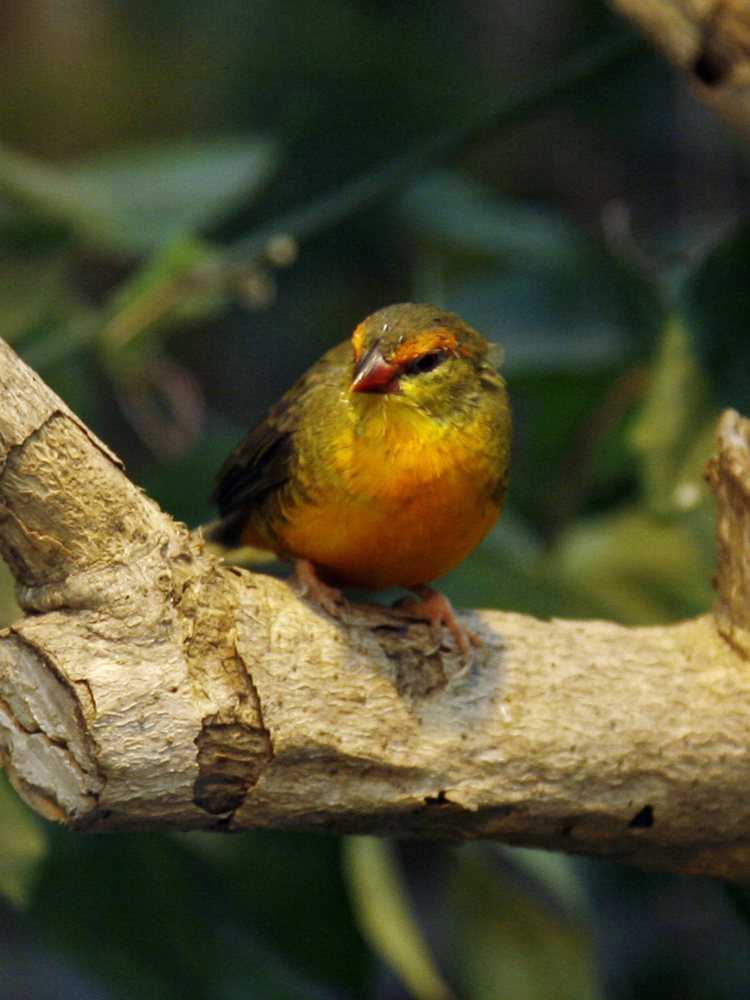
Photo: Johan Spaedtke aka Spade · Public domain
Amandava subflava
Conservation status: Unknown
Basic stats
Diet
Seeds, insects and shoots
Habitat
Grassland and savanna
Range
Sub-Saharan Africa
Clutch size
4–6 eggs
Size
About 9cm
Weight
Averages about 7g
Zebra Waxbills have dark olive-green plumage, reddish irises, red bills and orange breasts. Males show red rumps, dark flank bars and scarlet eyebrow stripes, while females are smaller and duller; AVONET records an average mass of about 7 g (Wikipedia, general species account; AVONET, Tobias et al. 2022).
Zebra Waxbills inhabit grassland and savanna south of the Sahara. They eat seeds, insects and shoots, and females lay four to six eggs in oval grass nests, often reusing nests built by Red-collared Widowbirds (Wikipedia, general species account; EltonTraits, Wilman et al. 2014).
Where to see Zebra Waxbill in Kenya
GBIF records grouped by protected area. They show where the species has been reported, not that it is there now, and they are not population counts.
Recorded in 3 protected areas (1983–2024).
- Nairobi National Park: 145 records (1983–2024)
- Kimana Sanctuary: 11 records (1998–2024)
- Amboseli National Park: 3 records (1984–2024)
Quick answers
- What does the Zebra Waxbill eat?
- Seeds, insects and shoots
- What habitat does the Zebra Waxbill live in?
- Grassland and savanna
- Where is the Zebra Waxbill found?
- Sub-Saharan Africa
- How many eggs does the Zebra Waxbill lay?
- 4–6 eggs
- How big is the Zebra Waxbill?
- About 9cm
- How much does the Zebra Waxbill weigh?
- Averages about 7g