
 Wildlife
of Kenya
White-eared Barbet
Barbets & Woodpeckers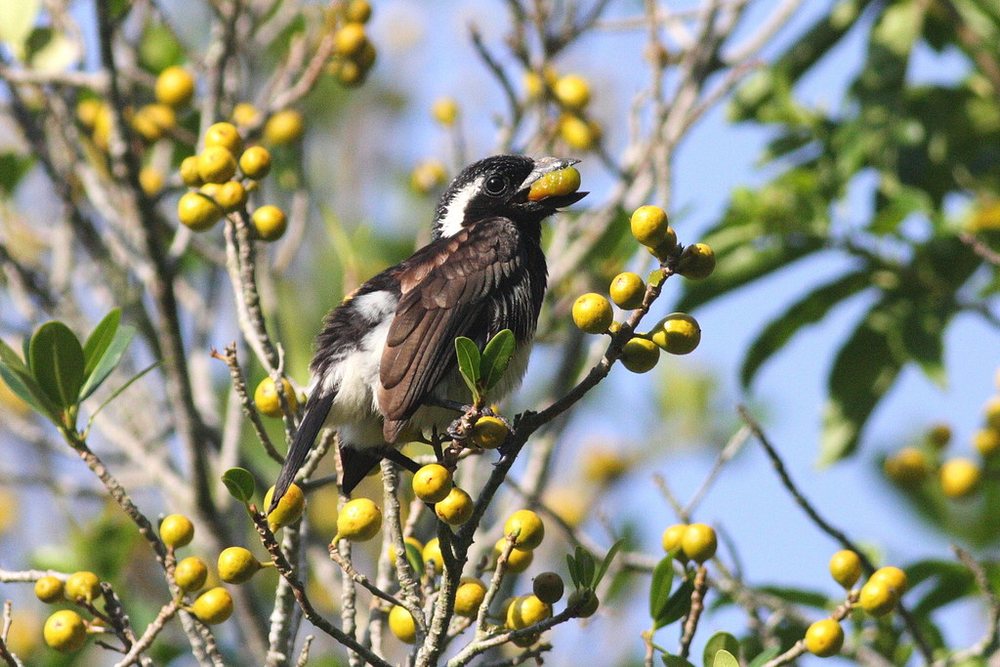
Photo: (c) Johan van Rensburg, some rights reserved (CC BY) · CC-BY (May be cropped or resized)
Stactolaema leucotis
Conservation status: Unknown
The white-eared barbet occurs in Eswatini and Kenya, with additional range in Malawi and Mozambique, as well as South Africa, Tanzania and Zimbabwe. It is a dark-brown woodland barbet with a white belly and dark head. The eyes are brown, with gray-black skin around them; the legs and feet range from black to gray-brown, with gray soles, and the bill is black. Facial, rump and wing white varies geographically, but a stripe behind the eye is always present. Young birds are darker than adults. (Wikipedia, general species account)
It uses highland forest, moist primary or secondary forest and some forest edges, as well as nearby gardens and plantations where fruiting trees and dead limbs for excavation are available. In some places it can use Eucalyptus plantations, including for breeding, if native trees and understory remain. In Malawi it occurs as high as 2,600 m in the north and at least 1,600 m in the south, often on forested slopes. Its fruit diet includes figs, guavas, pawpaws and mangoes, along with juniper and berries from Celtis gomphophylla and other plants. (Wikipedia, general species account)
Where to see White-eared Barbet in Kenya
GBIF records grouped by protected area. They show where the species has been reported, not that it is there now, and they are not population counts.
Recorded in 10 protected areas (1970–2024). The 8 with the most records:
- Shimba Hills National Reserve: 221 records (1970–2024)
- Upper Imenti Forest Reserve: 77 records (1984–2024)
- Mount Kenya National Reserve: 51 records (1985–2024)
- Meru National Park: 25 records (1997–2024)
- Mount Kenya National Park: 12 records (1978–2018)
- Chyulu Hills: 11 records (1978–2024)
- Aberdare Country Club Sanctuary Conservancy: 5 records (2014–2023)
- Arabuko-Sokoke Forest Reserve: 4 records (2001–2017)