
 Wildlife
of Kenya
White-bellied Yellow Bat
Bats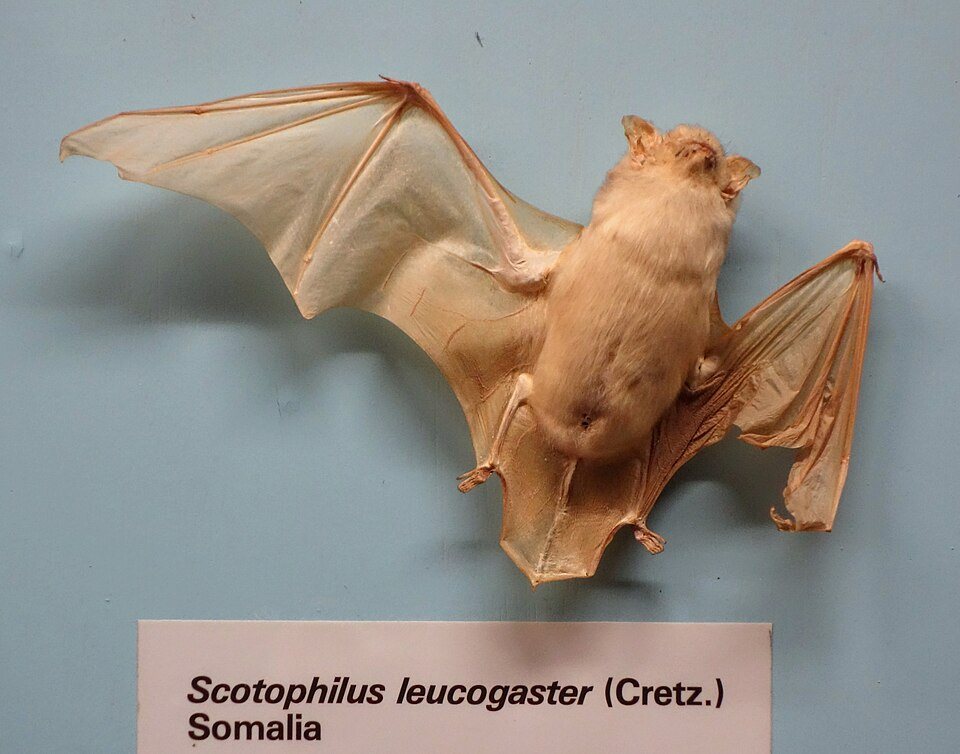
Photo: Daderot · CC0
Scotophilus leucogaster
Conservation status: Unknown
Basic stats
Diet
Beetles, moths and bugs, plus other insects; also geckos and dead bats in captivity
Habitat
Dry and moist savanna, open woodland, riverine woodland, mangroves and swamps
Range
Sub-Saharan Africa, from Mauritania and Senegal east to Sudan and Ethiopia and south to Namibia and Zambia
Litter size
Typically two
The white-bellied yellow bat, also called the white-bellied house bat, is a vesper bat in the genus Scotophilus, the house bats. It is a medium-sized, sturdy bat with a short snout, small ears and soft, woolly fur. Its colouring is variable, but the upper parts are some shade of yellow or yellowish-brown and the underparts whitish or yellowish. It has been recorded in a long list of countries across West, Central and Southern Africa (Wikipedia, general species account).
Its range extends from Mauritania and Senegal east to Sudan and Ethiopia and south to Namibia, Botswana, Zambia, Zimbabwe and Mozambique, occupying dry and moist savanna and open woodland (Wikipedia, general species account). Foraging begins soon after dusk, with bats hawking for insects in clearings, between trees and over grassland, and an hour is often enough to fill their stomachs. They avoid open spaces on moonlit nights. Roosts include holes in baobab trees, hollow mopane trees and the undersides of dead palm fronds, and in Zimbabwe breeding takes place in November and December, with litters typically of two (Wikipedia, general species account).
Quick answers
- What does the White-bellied Yellow Bat eat?
- Beetles, moths and bugs, plus other insects; also geckos and dead bats in captivity
- What habitat does the White-bellied Yellow Bat live in?
- Dry and moist savanna, open woodland, riverine woodland, mangroves and swamps
- Where is the White-bellied Yellow Bat found?
- Sub-Saharan Africa, from Mauritania and Senegal east to Sudan and Ethiopia and south to Namibia and Zambia
- What is the litter size of the White-bellied Yellow Bat?
- Typically two