
 Wildlife
of Kenya
White-backed Night Heron
Storks, Herons, Ibises & Flamingos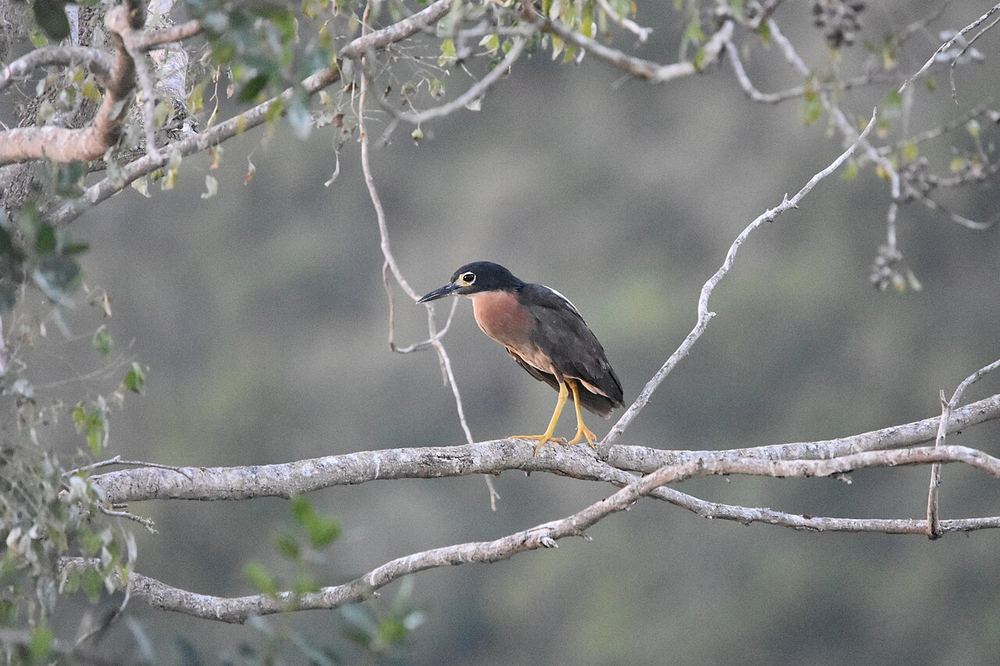
Photo: Justin Ponder · CC BY 4.0 (May be cropped or resized)
Calherodius leuconotus
Conservation status: Unknown
Basic stats
Diet
Fish, amphibians and invertebrates
Habitat
Forested wetlands and waterways
Range
Sub-Saharan Africa
Clutch size
2–3 eggs
Incubation period
About 24–26 days
Size
About 50–55cm
Weight
Averages about 440g
White-backed Night Herons are medium-sized African herons about 50–55 cm long and averaging 440 g. A black crested head, large red eyes, white throat and rufous neck and breast contrast with the triangular white scapular patch that gives the species its name. Immatures have streaked breasts and white-spotted wing coverts. Alarm produces a loud croak, while disturbance elicits a separate taash-like call (Wikipedia, general species account; AVONET, Tobias et al. 2022).
Central and southern African populations inhabit dense forest beside streams, lakes, marshes and mangroves. Solitary birds or pairs roost by day and forage along water after dark for fish, amphibians, mollusks and insects. A concealed platform of sticks or reeds is placed in waterside vegetation, reeds, mangroves, rocks or caves. Two or three green-white eggs incubate for 24–26 days, and chicks leave after six or seven weeks (Wikipedia, general species account; EltonTraits, Wilman et al. 2014).
Where to see White-backed Night Heron in Kenya
GBIF records grouped by protected area. They show where the species has been reported, not that it is there now, and they are not population counts.
Recorded in 3 protected areas (1978–2024).
- Nairobi National Park: 122 records (1997–2024)
- Meru National Park: 4 records (2024)
- Masai Mara: 3 records (1978–2024)
Quick answers
- What does the White-backed Night Heron eat?
- Fish, amphibians and invertebrates
- What habitat does the White-backed Night Heron live in?
- Forested wetlands and waterways
- Where is the White-backed Night Heron found?
- Sub-Saharan Africa
- How many eggs does the White-backed Night Heron lay?
- 2–3 eggs
- How long are the eggs of the White-backed Night Heron incubated?
- About 24–26 days
- How big is the White-backed Night Heron?
- About 50–55cm
- How much does the White-backed Night Heron weigh?
- Averages about 440g