
 Wildlife
of Kenya
Wahlberg's Epauletted Fruit Bat
Bats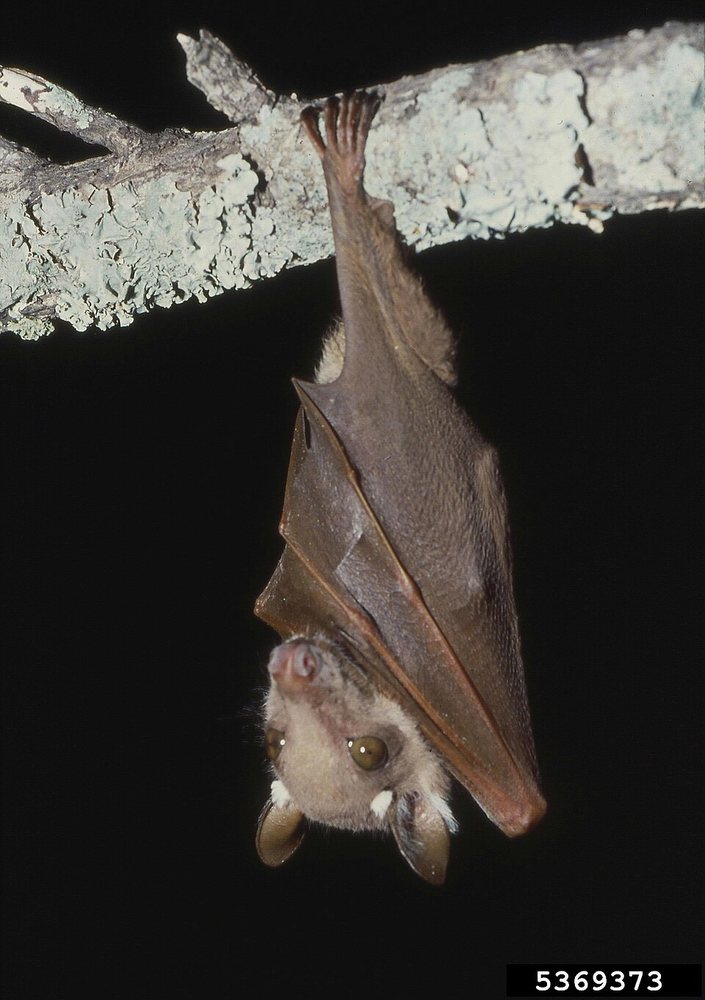
Photo: Susan Ellis, Bugwoord.org · CC BY 3.0 us (May be cropped or resized)
Epomophorus wahlbergi
Conservation status: Unknown
Basic stats
Diet
Figs, guava and Diospyros fruits; some Balanites leaves and insects
Habitat
Forest, shrubland and savanna, sea level to about 2000m
Range
Southern Africa
Gestation period
About 165 days
Weight
54–125g
Wahlberg's epauletted fruit bat is brown to tawny, with white hair patches at the base of each ear, and males are typically darker than females. Males carry erectable epaulettes of hair over scent glands and have air sacs on the neck that may increase the volume of courtship calls. Its wings are broad compared with other bats. Wingspan is 510–600mm in males and 456–540mm in females, and adults weigh 54–125g. The eyes are large, the ears are simple and oval without a tragus, and skulls measure 44–57mm in males and 41–49mm in females (Wikipedia, general species account).
It is found across southern Africa in forest, shrubland and savanna habitats from sea level up to about 2000m, and its distribution in South Africa is strongly tied to annual rainfall (GBIF description, Pteropodidae). Its diet is mainly figs, guava and Diospyros fruits, which are often carried to another tree before eating, and it also takes Balanites leaves and some insects. It roosts in well-lit open trees, under palm fronds, in forests near rivers, under thatched roofs and rarely in caves, in groups of 3–100. Roost sites often change every few days, and it may fly 4km to feeding areas. Gestation is about 165 days, with one young per litter (Wikipedia, general species account; AnAge).
Where to see Wahlberg's Epauletted Fruit Bat in Kenya
GBIF records grouped by protected area. They show where the species has been reported, not that it is there now, and they are not population counts.
Recorded in 18 protected areas (1963–2015). The 8 with the most records:
- Arabuko-Sokoke Forest Reserve: 35 records (2006–2012)
- Marsabit National Park: 21 records (1971–2015)
- Kagamega Forest: 19 records (1963–2014)
- Mathew's Range Forest Reserve: 14 records (2005)
- Shimba Hills National Reserve: 14 records (1965–2012)
- Diani-Chale Marine Reserve: 11 records (1974)
- Tsavo West National Park: 10 records (2006–2012)
- Loldaiga Hills Conservancy: 10 records (2014)
Quick answers
- What does the Wahlberg's Epauletted Fruit Bat eat?
- Figs, guava and Diospyros fruits; some Balanites leaves and insects
- What habitat does the Wahlberg's Epauletted Fruit Bat live in?
- Forest, shrubland and savanna, sea level to about 2000m
- Where is the Wahlberg's Epauletted Fruit Bat found?
- Southern Africa
- How long is the gestation period of the Wahlberg's Epauletted Fruit Bat?
- About 165 days
- How much does the Wahlberg's Epauletted Fruit Bat weigh?
- 54–125g