
 Wildlife
of Kenya
Terek Sandpiper
Plovers, Sandpipers & Other Waders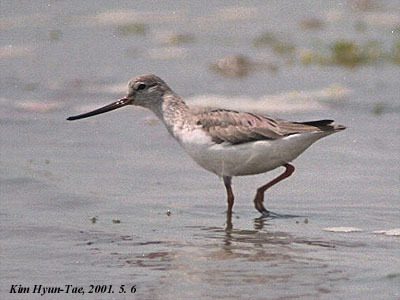
Photo: Kim, Hyun-tae · CC BY 4.0 (May be cropped or resized)
Xenus cinereus
Conservation status: Unknown
Basic stats
Diet
Mostly invertebrates
Habitat
River valleys and open northern ground when breeding; tidal mudflats, estuaries and mangroves at other seasons
Range
Breeds across northern Eurasia; winters along coasts of Africa, southern Asia and Australia
Weight
Averages about 79g
The Terek Sandpiper is a small, active wader with short orange-yellow legs and a long, distinctly upturned bill. Its upperparts are plain grey-brown, the underparts white, and a dark shoulder streak is often visible. A pale trailing edge shows across the wing in flight. The combination of low stance, unusual bill shape and quick darting movements gives it a distinctive profile. Adults average about 78.8 g (Wikipedia, general species account; AVONET, Tobias et al. 2022).
The species breeds across northern Eurasia, generally beside rivers and other open wet ground, before migrating to coasts in Africa, southern Asia and Australasia. Tidal mudflats, estuaries and mangrove edges are important outside the breeding season. Birds run over soft sediment and seize prey from the surface or probe shallowly, taking mostly invertebrates. They often work rapidly along the waterline, and nesting takes place in a shallow ground scrape (Wikipedia, general species account; EltonTraits, Wilman et al. 2014).
Where to see Terek Sandpiper in Kenya
GBIF records grouped by protected area. They show where the species has been reported, not that it is there now, and they are not population counts.
Recorded in 7 protected areas (1937–2024).
- Watamu Marine National Park: 673 records (1937–2024)
- Mombasa Marine Reserve: 29 records (1977–2023)
- Tana Delta Community Conservancy: 26 records (1998–2023)
- Arabuko-Sokoke Forest Reserve: 15 records (1982–2024)
- Amboseli National Park: 14 records (1980–2024)
- Lake Nakuru National Park: 7 records (1980–2015)
- Diani-Chale Marine Reserve: 5 records (2008–2024)
Quick answers
- What does the Terek Sandpiper eat?
- Mostly invertebrates
- What habitat does the Terek Sandpiper live in?
- River valleys and open northern ground when breeding; tidal mudflats, estuaries and mangroves at other seasons
- Where is the Terek Sandpiper found?
- Breeds across northern Eurasia; winters along coasts of Africa, southern Asia and Australia
- How much does the Terek Sandpiper weigh?
- Averages about 79g