
 Wildlife
of Kenya
Southern Silvery Mole-rat
Rodents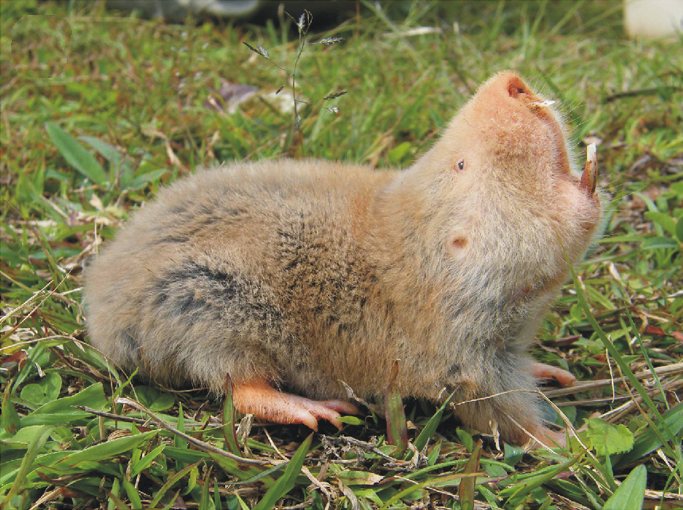
Photo: (c) Sharry Goldman, some rights reserved (CC BY) · CC-BY (May be cropped or resized)
Heliophobius argenteocinereus
Conservation status: Unknown
Basic stats
Diet
Roots, bulbs and corms, especially those of Dolichos and Vigna
Habitat
Open grassy woodland, sub-montane grassland and rocky slopes
Range
Southern Kenya, Tanzania, southeastern DR Congo, Mozambique and Malawi
Gestation period
About 88 days
Size
Medium-sized; males about 15% larger than females in Malawi
The southern silvery mole-rat, also called the silvery blesmol or silky mole-rat, has a moderate build and a coat of soft, silky silvery-grey hair. The face looks lighter near the eyes, along the sides and across the snout, and some individuals show a small white forehead patch. Long, slightly curved incisors sit outside the lips, and the feet and claws are pale and not enlarged for digging. Its tail is under a tenth of the head-and-body length. Males are about 15% larger than females in Malawi, although elsewhere the sexes differ little in size. It is monotypic in the genus Heliophobius (Wikipedia, general species account).
Its range covers southern Kenya, Tanzania, the southeastern Democratic Republic of Congo, Mozambique and Malawi, where its habitat is open grassy woodland, including Combretum-Brachystegium stands, plus sub-montane grassland and rocky slopes. Wikipedia says it tolerates both sandy and black cotton soils, while GBIF describes compact sandy soils in grasslands with annual rainfall above 900mm. Solitary, territorial and fairly aggressive, it digs with its incisors and drives away rival mole-rats. Plant food dominates its diet, mostly roots, bulbs and corms, especially those of Dolichos and Vigna plants, and it occasionally raids root crops in fields. Breeding occurs in May and June, and gestation lasts about 88 days (GBIF description, Bathyergidae; AnAge; Wikipedia, general species account).
Quick answers
- What does the Southern Silvery Mole-rat eat?
- Roots, bulbs and corms, especially those of Dolichos and Vigna
- What habitat does the Southern Silvery Mole-rat live in?
- Open grassy woodland, sub-montane grassland and rocky slopes
- Where is the Southern Silvery Mole-rat found?
- Southern Kenya, Tanzania, southeastern DR Congo, Mozambique and Malawi
- How long is the gestation period of the Southern Silvery Mole-rat?
- About 88 days
- How big is the Southern Silvery Mole-rat?
- Medium-sized; males about 15% larger than females in Malawi