
 Wildlife
of Kenya
Southern Black-Flycatcher
Chats, Robins, Thrushes & Flycatchers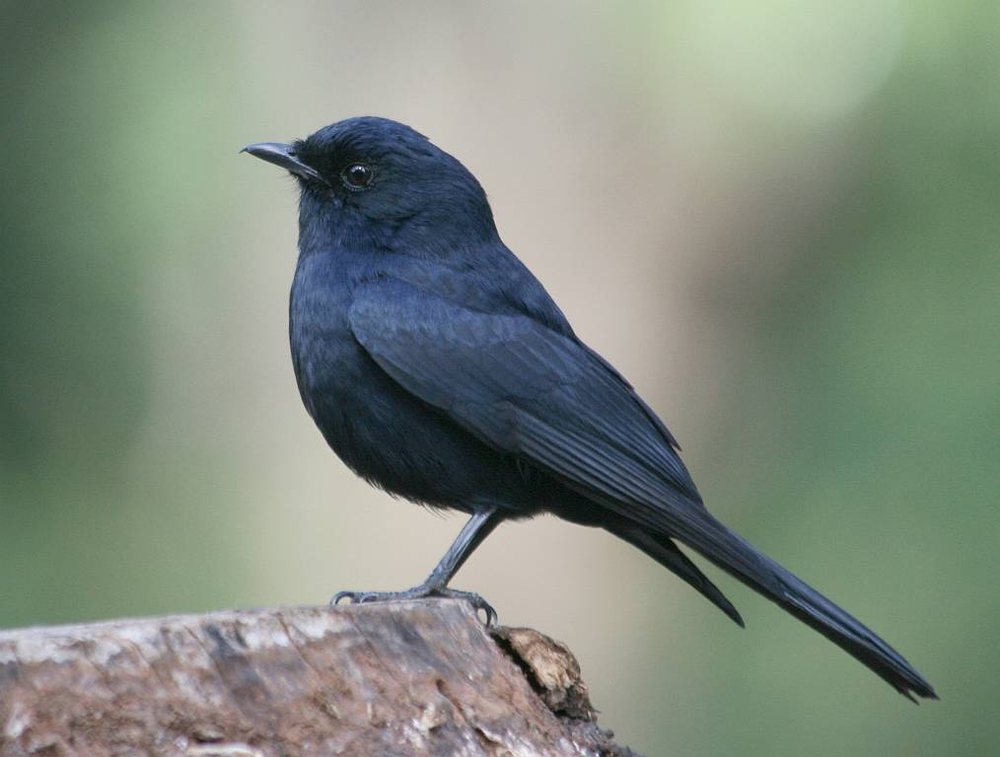
Photo: (c) Alan Manson, some rights reserved (CC BY-SA) · CC-BY-SA (May be cropped or resized)
Melaenornis pammelaina
Conservation status: Unknown
Basic stats
Diet
Insects, with some nectar and berries
Habitat
Open areas, light woodland, riparian corridors and gardens
Range
Eastern and southern Africa
Size
20cm
Weight
30g
The Southern Black-Flycatcher inhabits open, lightly wooded country in eastern and southern Africa. Its body, bill, and legs are all black. A brown iris and square-ended tail distinguish it from Fork-tailed Drongo, whose iris is red and tail long and forked (Wikipedia, general species account).
It uses open land, sparse woodland, river corridors, plantation margins, and gardens. Insects are its main food, including beetles, termites, locusts, worms, spiders, and centipedes; it also takes nectar and berries. It pounces from low perches, sometimes feeds in small flocks, and may associate with Fork-tailed Drongos (Wikipedia, general species account).
Where to see Southern Black-Flycatcher in Kenya
GBIF records grouped by protected area. They show where the species has been reported, not that it is there now, and they are not population counts.
Recorded in 70 protected areas (1963–2026). The 8 with the most records:
- Nairobi National Park: 449 records (1973–2026)
- Samburu National Reserve: 281 records (1973–2026)
- Buffalo Springs National Reserve: 223 records (1981–2026)
- Tsavo West National Park: 183 records (1969–2024)
- Amboseli National Park: 165 records (1976–2024)
- Mpala Ranch: 154 records (2004–2025)
- Ol Pejeta Conservancy: 149 records (1994–2025)
- Lewa Wildlife Conservancy: 88 records (1984–2024)
Quick answers
- What does the Southern Black-Flycatcher eat?
- Insects, with some nectar and berries
- What habitat does the Southern Black-Flycatcher live in?
- Open areas, light woodland, riparian corridors and gardens
- Where is the Southern Black-Flycatcher found?
- Eastern and southern Africa
- How big is the Southern Black-Flycatcher?
- 20cm
- How much does the Southern Black-Flycatcher weigh?
- 30g