
 Wildlife
of Kenya
Sharpe's Longclaw
Larks, Pipits & Wagtails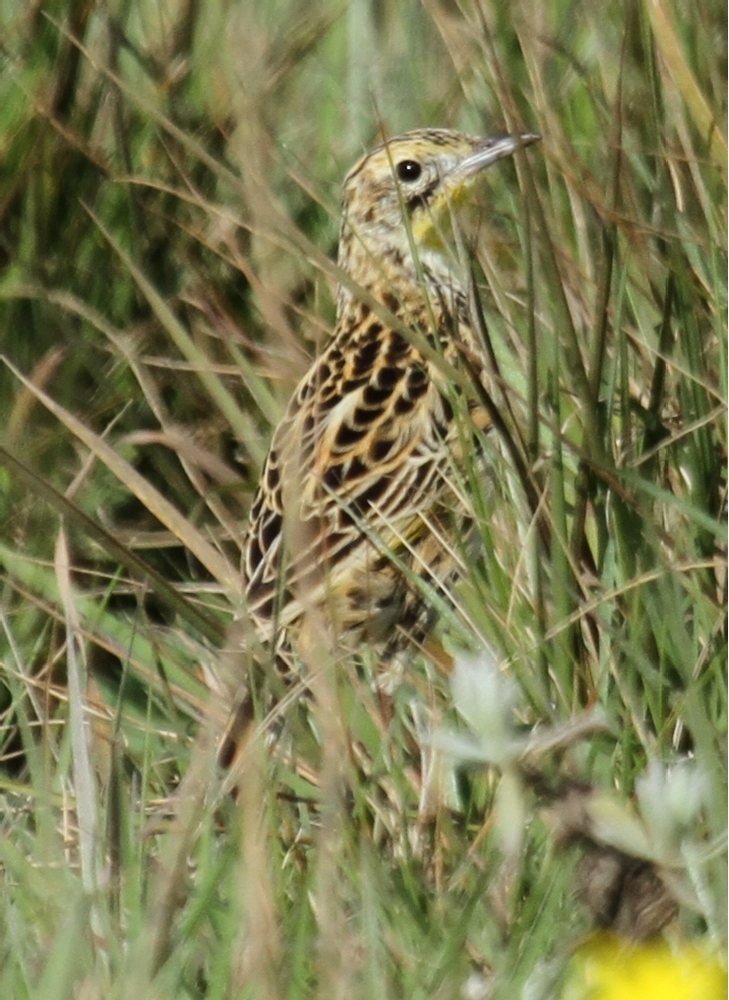
Photo: TonyCastro · CC BY-SA 4.0 (May be cropped or resized)
Macronyx sharpei
Conservation status: Unknown
Basic stats
Diet
Insects
Habitat
Open treeless grassland
Range
West and central Kenya
Clutch size
Two or three eggs
Size
16–17cm
Sharpe’s Longclaw is 16–17 cm long, with upperparts heavily streaked in buff and rufous, yellow underparts, and white outer tail feathers seen in flight. It occupies open grassland without trees, where grasses are short and often tussocky, and is generally nonmigratory (Wikipedia, general species account).
It occurs in Kenya’s western and central highlands, including Mount Kenya and Aberdare slopes and plateaus around the Rift Valley. It eats insects, especially grasshoppers and beetles; individuals usually forage alone or as pairs, sometimes with small family groups. Breeding occurs during or after rains; two or three eggs are laid in a dried-grass cup (Wikipedia, general species account).
Where to see Sharpe's Longclaw in Kenya
GBIF records grouped by protected area. They show where the species has been reported, not that it is there now, and they are not population counts.
Recorded in 5 protected areas (1971–2024).
- Aberdare National Park: 8 records (2007–2021)
- Elephant corridor: 7 records (2024)
- Solio Ranch and Conservancy: 5 records (1971–2007)
- Mount Kenya National Park: 3 records (1990–2021)
- Malu Private Forest Reserve & Ranch: 3 records (2000–2014)
Quick answers
- What does the Sharpe's Longclaw eat?
- Insects
- What habitat does the Sharpe's Longclaw live in?
- Open treeless grassland
- Where is the Sharpe's Longclaw found?
- West and central Kenya
- How many eggs does the Sharpe's Longclaw lay?
- Two or three eggs
- How big is the Sharpe's Longclaw?
- 16–17cm