
 Wildlife
of Kenya
Pale Chanting-Goshawk
Raptors & Vultures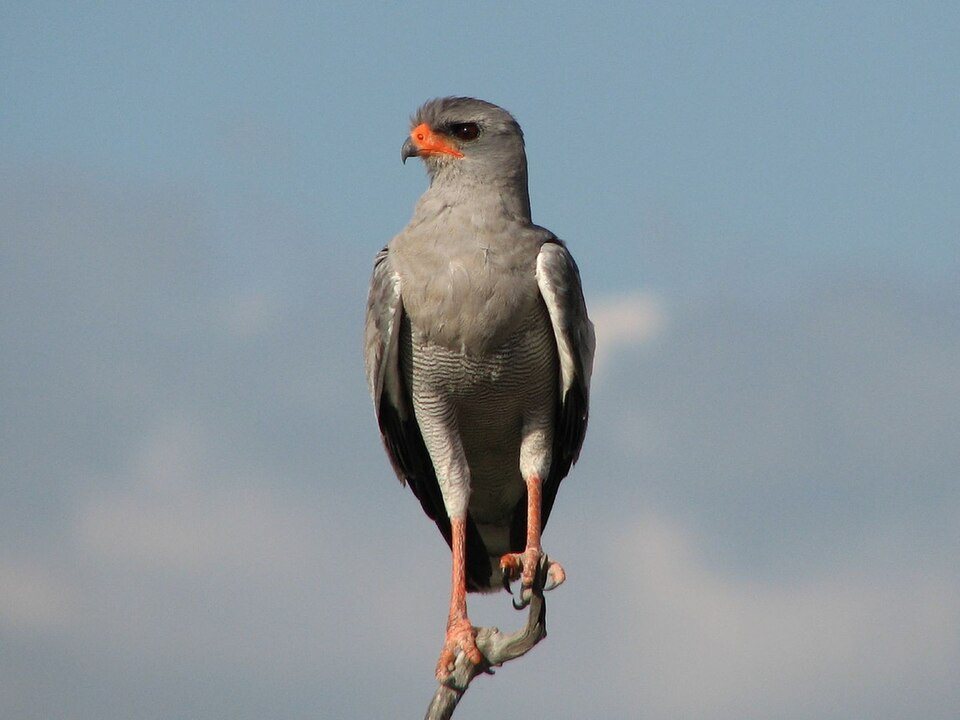
Photo: Flickr users Alastair Rae · CC BY-SA 2.0 (May be cropped or resized)
Melierax canorus
Conservation status: Unknown
Basic stats
Diet
Small mammals, lizards, birds, large insects and carrion
Habitat
Trees, poles and pylons used as hunting perches
The Pale Chanting-Goshawk hunts mainly from high perches such as trees and telephone poles, though it also walks on the ground after prey. It is opportunistic, taking small mammals up to Cape hare size, lizards, birds, large insects, and carrion. Hatchling soft-shelled tortoises are also among its recorded prey (Wikipedia, general species account).
It usually hunts alone, though social hunting has been seen in breeding groups. The goshawk often associates with foraging honey badgers and eats organisms they flush. It builds a small stick nest in a tree, often a Vachellia, or on a pole or pylon at 2–12 m. Females lay and incubate two chalky-white eggs, occasionally one or three (Wikipedia, general species account).
Where to see Pale Chanting-Goshawk in Kenya
GBIF records grouped by protected area. They show where the species has been reported, not that it is there now, and they are not population counts.
Recorded in 4 protected areas (1966–2018).
- Nyiro Forest Reserve: 5 records (1966–1968)
- Tsavo East National Park: 4 records (2018)
- Tsavo West National Park: 4 records (2017–2018)
- Ngutuni Conservancy: 3 records (2018)
Quick answers
- What does the Pale Chanting-Goshawk eat?
- Small mammals, lizards, birds, large insects and carrion
- What habitat does the Pale Chanting-Goshawk live in?
- Trees, poles and pylons used as hunting perches