
 Wildlife
of Kenya
Olive Thrush
Chats, Robins, Thrushes & Flycatchers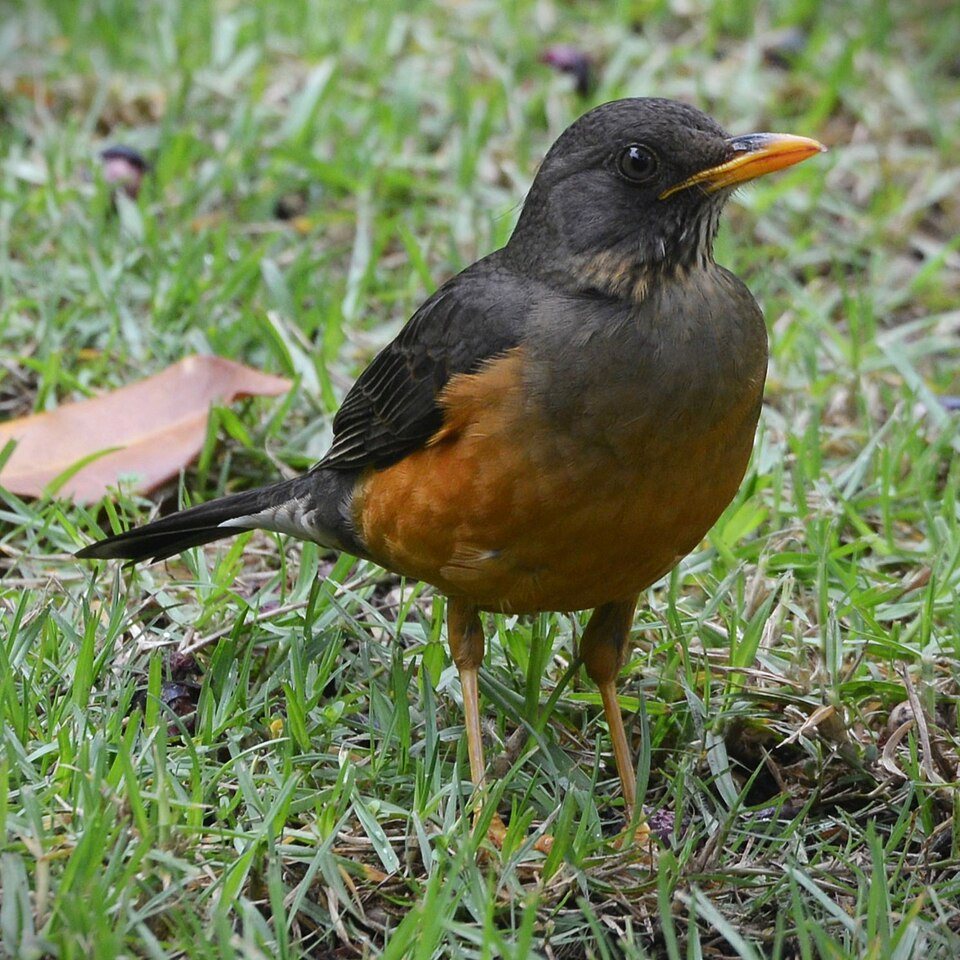
Photo: Gouldingken · CC BY 4.0 (May be cropped or resized)
Turdus olivaceus
Conservation status: Unknown
Basic stats
Diet
Invertebrates, fruit and seeds
Habitat
Forest, woodland, parks and large gardens
Range
Eastern and central African highlands to the Cape of Good Hope
Size
About 24cm
Olive Thrush is widespread in African highlands, from eastern and central montane regions south to the Cape of Good Hope. It uses forest and woodland and has also adapted locally to parks and large suburban gardens. Adults may reach about 24 cm. (Wikipedia, general species account; Collins Birds of the World)
The upperparts and tail are dull olive-brown, the belly white, and much of the remaining underparts orange-toned. The throat has white spotting. Males sing varied combinations of fluted, whistled and trilled phrases, sometimes imitating other birds. (Wikipedia, general species account; Collins Birds of the World)
Where to see Olive Thrush in Kenya
GBIF records grouped by protected area. They show where the species has been reported, not that it is there now, and they are not population counts.
Recorded in 5 protected areas (1966–2018).
- Nairobi National Park: 34 records (2017–2018)
- Mount Kenya National Reserve: 11 records (2017–2018)
- South Nandi Forest Reserve: 5 records (2018)
- Kirisa Forest Reserve: 4 records (1966–2018)
- Aberdare National Park: 3 records (2017)
Quick answers
- What does the Olive Thrush eat?
- Invertebrates, fruit and seeds
- What habitat does the Olive Thrush live in?
- Forest, woodland, parks and large gardens
- Where is the Olive Thrush found?
- Eastern and central African highlands to the Cape of Good Hope
- How big is the Olive Thrush?
- About 24cm