
 Wildlife
of Kenya
Olive Ibis
Storks, Herons, Ibises & Flamingos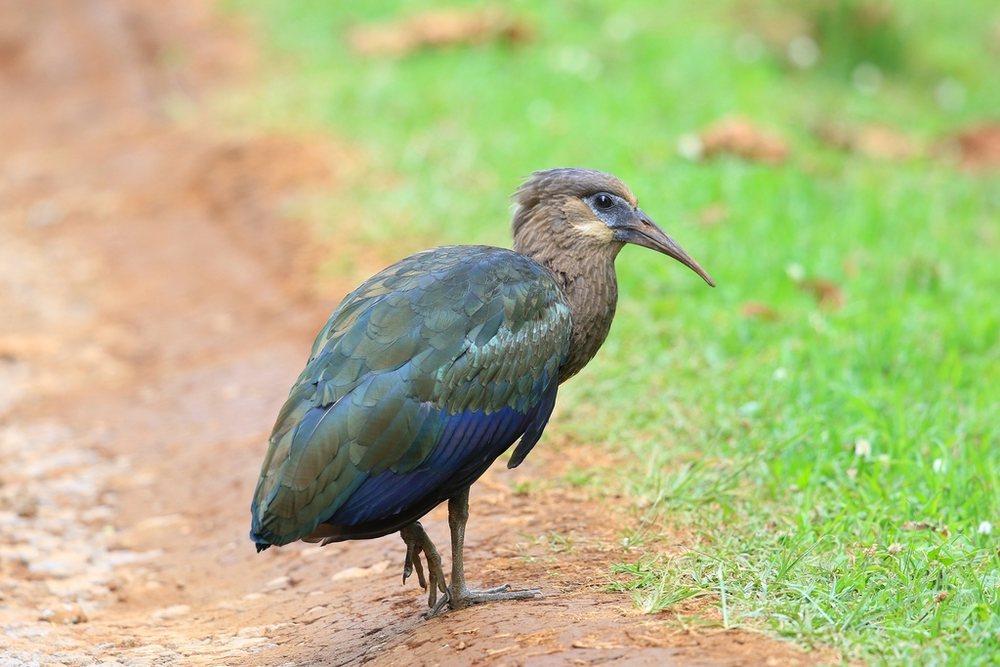
Photo: (c) Merrittimages, some rights reserved (CC BY-SA) · CC-BY-SA (May be cropped or resized)
Bostrychia olivacea
Conservation status: Unknown
Basic stats
Diet
Mostly invertebrates
Habitat
Dense tropical forest
Range
Tropical Africa
Size
About 65–75cm
Weight
Averages about 866g
Olive Ibises are 65–75 cm forest birds averaging roughly 866 g. Dusky-brown plumage shines green and bronze, while pale lines run beneath the eyes and a brown crest grades to purple near the neck. Coral-red bills, dark-blue tails and bluish-black bare facial skin add color, though the species can be difficult to separate visually from Spot-breasted Ibises (Wikipedia, general species account; AVONET, Tobias et al. 2022).
Patchy populations span dense tropical forest from western to eastern Africa and include Príncipe and São Tomé, with eastern mountain birds occupying higher elevations. The ibis feeds silently by day, mostly on invertebrates, and forages largely on the ground. Dawn and dusk flights reveal a strong, straggling wingbeat and repeated loud squawking calls whose rhythm helps distinguish it from similar ibises (Wikipedia, general species account; EltonTraits, Wilman et al. 2014).
Where to see Olive Ibis in Kenya
GBIF records grouped by protected area. They show where the species has been reported, not that it is there now, and they are not population counts.
Recorded in 3 protected areas (1978–2026).
- Mount Kenya National Reserve: 488 records (1981–2026)
- Mount Kenya National Park: 32 records (1987–2024)
- Aberdare National Park: 5 records (1978–2024)
Quick answers
- What does the Olive Ibis eat?
- Mostly invertebrates
- What habitat does the Olive Ibis live in?
- Dense tropical forest
- Where is the Olive Ibis found?
- Tropical Africa
- How big is the Olive Ibis?
- About 65–75cm
- How much does the Olive Ibis weigh?
- Averages about 866g