
 Wildlife
of Kenya
Lesser Kestrel
Raptors & Vultures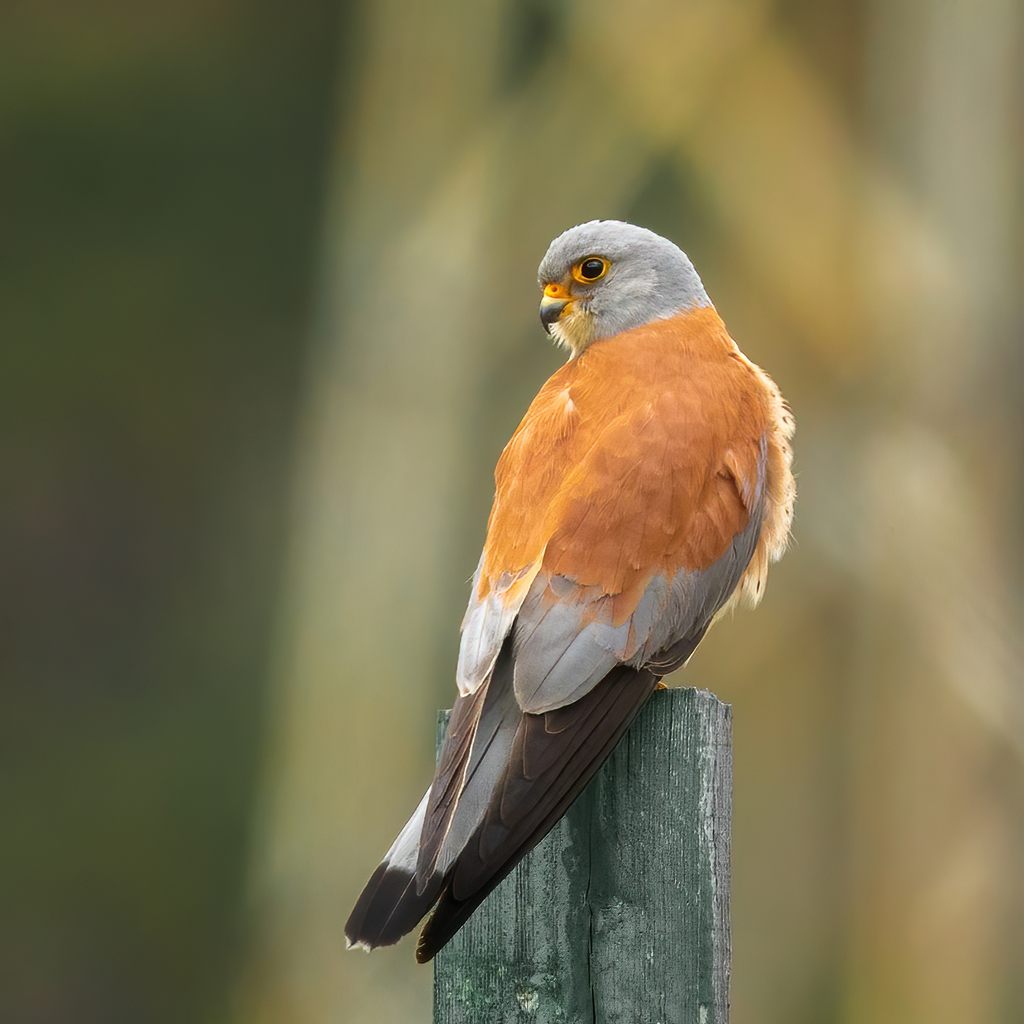
Photo: (c) egorbirder, some rights reserved (CC BY) · CC BY 4.0 (May be cropped or resized)
Falco naumanni
Conservation status: Unknown
Basic stats
Diet
Mainly insects
Habitat
Open country, grassland and cultivation
Range
Breeds from the Mediterranean and northwestern Africa through Central Asia to China and Mongolia; winters mainly in Africa and South Asia
Clutch size
3–6 eggs
Size
27–33cm
Wingspan
63–72cm
Weight
Averages about 152g
The Lesser Kestrel is a small, slender falcon measuring about 27–33 cm, spanning 63–72 cm and averaging roughly 152 g. It resembles the Common Kestrel, but males have unspotted rufous backs, grey panels in the wings and no dark moustachial stripe. Females and juveniles are harder to separate by plumage, while the pale claws and harsh chattering call provide useful clues (Wikipedia, general species account; AVONET, Tobias et al. 2022).
The species breeds from the Mediterranean and northwestern Africa through Central Asia to China and Mongolia, then migrates mainly to Africa and South Asia. It favours open country, grassland and cultivation. Insects dominate the diet and are often caught on or near the ground. Lesser Kestrels breed socially in buildings, cliffs or tree cavities, lay three to six eggs and do not construct a conventional nest (Wikipedia, general species account; EltonTraits, Wilman et al. 2014).
Where to see Lesser Kestrel in Kenya
GBIF records grouped by protected area. They show where the species has been reported, not that it is there now, and they are not population counts.
Recorded in 44 protected areas (1966–2026). The 8 with the most records:
- Masai Mara: 496 records (1972–2026)
- Nairobi National Park: 255 records (1980–2024)
- Mara Triangle: 186 records (1980–2024)
- Lake Nakuru National Park: 97 records (1977–2026)
- Amboseli National Park: 66 records (1983–2024)
- Mpala Ranch: 65 records (2000–2024)
- Buffalo Springs National Reserve: 45 records (1984–2024)
- Samburu National Reserve: 39 records (1984–2024)
Quick answers
- What does the Lesser Kestrel eat?
- Mainly insects
- What habitat does the Lesser Kestrel live in?
- Open country, grassland and cultivation
- Where is the Lesser Kestrel found?
- Breeds from the Mediterranean and northwestern Africa through Central Asia to China and Mongolia; winters mainly in Africa and South Asia
- How many eggs does the Lesser Kestrel lay?
- 3–6 eggs
- How big is the Lesser Kestrel?
- 27–33cm
- What is the wingspan of the Lesser Kestrel?
- 63–72cm
- How much does the Lesser Kestrel weigh?
- Averages about 152g