
 Wildlife
of Kenya
Leptotyphlops conjunctus
Blind & Burrowing Snakes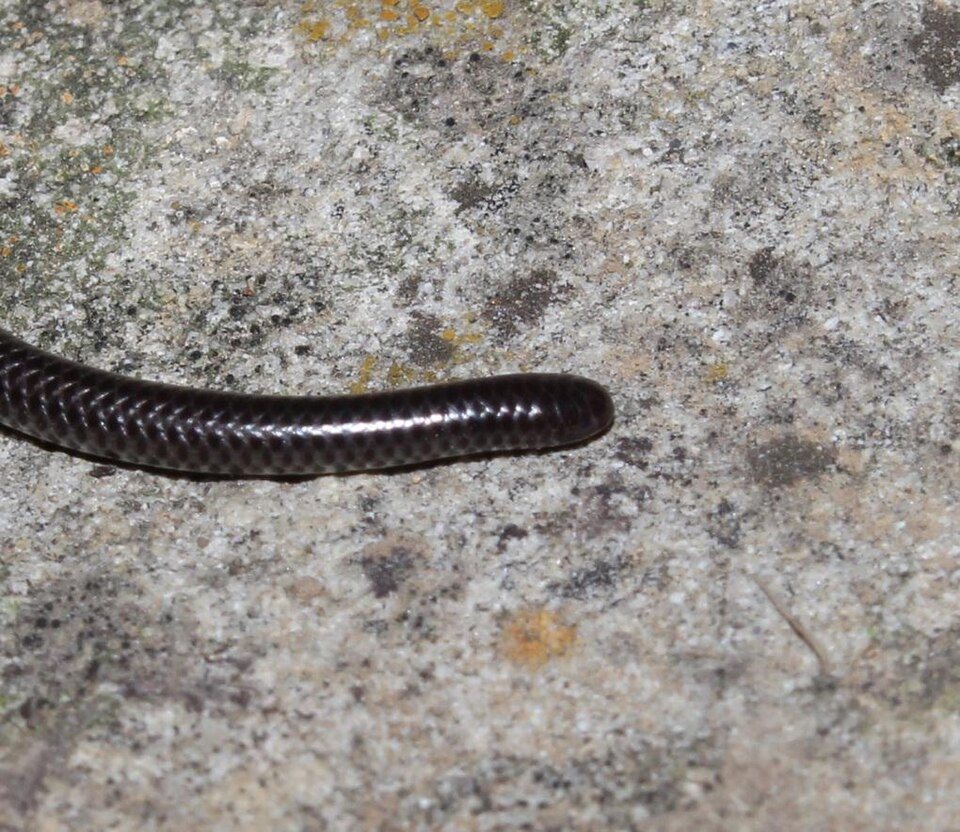
Photo: Brian du Preez · CC BY-SA 4.0 (May be cropped or resized)
Leptotyphlops conjunctus
Conservation status: Unknown
Basic stats
Habitat
Grassland to 1,497 m
Range
Southern Africa
Size
Up to 253 mm
The Cape thread snake is a nonvenomous leptotyphlopid that was formerly treated as a subspecies of Peters’s thread snake. It was first described in 1861 under the name Stenostoma conjunctum. The species is a small, fossorial snake recorded in grassland at elevations up to 1,497 m. (Wikipedia, general species account; ReptTraits, Oskyrko et al. 2024)
Maximum total length is about 253 mm, and the species lays eggs. It spends much of its life underground, where its slender form suits movement through soil. Its taxonomic history and southern African grassland records distinguish it from other thread snakes. (Wikipedia, general species account; ReptTraits, Oskyrko et al. 2024)
Quick answers
- What habitat does the Leptotyphlops conjunctus live in?
- Grassland to 1,497 m
- Where is the Leptotyphlops conjunctus found?
- Southern Africa
- How big is the Leptotyphlops conjunctus?
- Up to 253 mm