
 Wildlife
of Kenya
Isabelline Wheatear
Chats, Robins, Thrushes & Flycatchers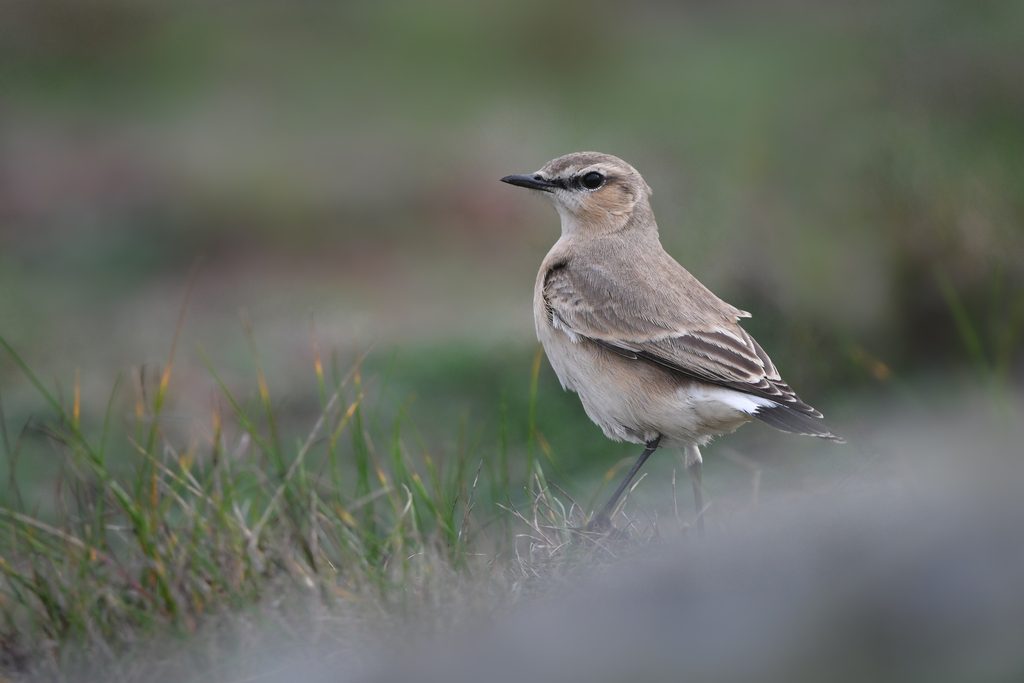
Photo: Julien Renoult · CC BY 4.0 (May be cropped or resized)
Oenanthe isabellina
Conservation status: Unknown
Basic stats
Diet
Mainly insects and other invertebrates, with some seeds
Habitat
Steppe, desert, high plateaux and open semi-arid country
Range
Breeds from southern Russia and central Asia to the Middle East and northern Pakistan; winters in Africa and northwestern India
Size
15–16.5cm
Weight
Averages about 29g
The Isabelline Wheatear is a pale sandy-brown chat with an upright stance, creamy underparts, white rump and a dark tail with a broad white base. Males and females look similar. Compared with the Northern Wheatear it is larger and paler, with a longer bill, whiter underwing coverts and more black in the tail. It regularly bobs and spreads its tail while standing on low perches. Adults measure 15–16.5 cm and average about 29 g (Wikipedia, general species account; AVONET, Tobias et al. 2022).
Across its range, the species breeds from southern Russia and central Asia into the Middle East and northern Pakistan, migrating to Africa and northwestern India. It favours steppe, deserts, high plateaux and other open semi-arid ground, often with sparse scrub or nearby cultivation. Most food is found while hopping and probing on the ground, though birds sometimes rise to catch prey. Ants, grasshoppers, flies, moths, larvae and spiders are eaten, together with some seeds (Wikipedia, general species account; EltonTraits, Wilman et al. 2014).
Where to see Isabelline Wheatear in Kenya
GBIF records grouped by protected area. They show where the species has been reported, not that it is there now, and they are not population counts.
Recorded in 92 protected areas (1949–2026). The 8 with the most records:
- Nairobi National Park: 597 records (1949–2024)
- Masai Mara: 586 records (1976–2026)
- Amboseli National Park: 374 records (1982–2026)
- Buffalo Springs National Reserve: 330 records (1981–2025)
- Tsavo East National Park: 274 records (1987–2026)
- Samburu National Reserve: 255 records (1973–2024)
- Mpala Ranch: 227 records (2004–2026)
- Tsavo West National Park: 166 records (1966–2025)
Quick answers
- What does the Isabelline Wheatear eat?
- Mainly insects and other invertebrates, with some seeds
- What habitat does the Isabelline Wheatear live in?
- Steppe, desert, high plateaux and open semi-arid country
- Where is the Isabelline Wheatear found?
- Breeds from southern Russia and central Asia to the Middle East and northern Pakistan; winters in Africa and northwestern India
- How big is the Isabelline Wheatear?
- 15–16.5cm
- How much does the Isabelline Wheatear weigh?
- Averages about 29g