
 Wildlife
of Kenya
Grosbeak Weaver
Weavers, Waxbills & Whydahs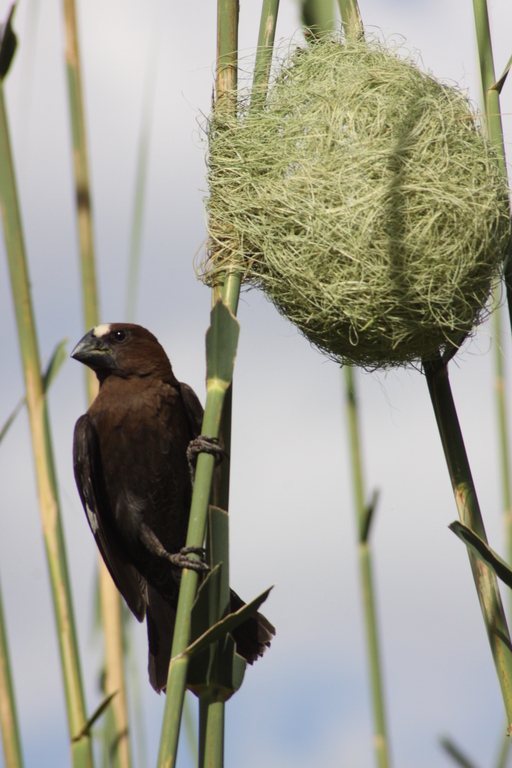
Photo: derekkeats · CC BY-SA 2.0 (May be cropped or resized)
Amblyospiza albifrons
Conservation status: Unknown
Basic stats
Diet
Invertebrates, fruit and seeds
Habitat
Marshes, uplands and suburban wetlands
Range
West, East and southern Africa
Weight
Averages about 42g
Grosbeak Weavers have exceptionally strong mandibles used to extract seeds from nutlets and drupes. They habitually fan and flick their tails, deliver harsh unmusical songs and average about 42 g, with an AVONET wing length of about 91 mm (Wikipedia, general species account; AVONET, Tobias et al. 2022).
Grosbeak Weavers occur patchily across tropical Africa in marshes, uplands, suburbs and artificial wetlands. Males weave compact globe nests from fine reed strips between upright stems, reducing the high side entrance after a female chooses the nest; colonies may contain one or several males (Wikipedia, general species account; EltonTraits, Wilman et al. 2014).
Where to see Grosbeak Weaver in Kenya
GBIF records grouped by protected area. They show where the species has been reported, not that it is there now, and they are not population counts.
Recorded in 45 protected areas (1967–2024). The 8 with the most records:
- Nairobi National Park: 585 records (1975–2024)
- Kagamega Forest: 181 records (1967–2024)
- Tsavo West National Park: 92 records (1981–2024)
- Masai Mara: 87 records (1981–2024)
- Lake Nakuru National Park: 83 records (1973–2024)
- Arabuko-Sokoke Forest Reserve: 45 records (1973–2023)
- Tsavo East National Park: 42 records (1990–2024)
- Masai Moran Conservancy: 42 records (2015–2024)
Quick answers
- What does the Grosbeak Weaver eat?
- Invertebrates, fruit and seeds
- What habitat does the Grosbeak Weaver live in?
- Marshes, uplands and suburban wetlands
- Where is the Grosbeak Weaver found?
- West, East and southern Africa
- How much does the Grosbeak Weaver weigh?
- Averages about 42g