
 Wildlife
of Kenya
Greater Whitethroat
Cisticolas, Warblers & White-eyes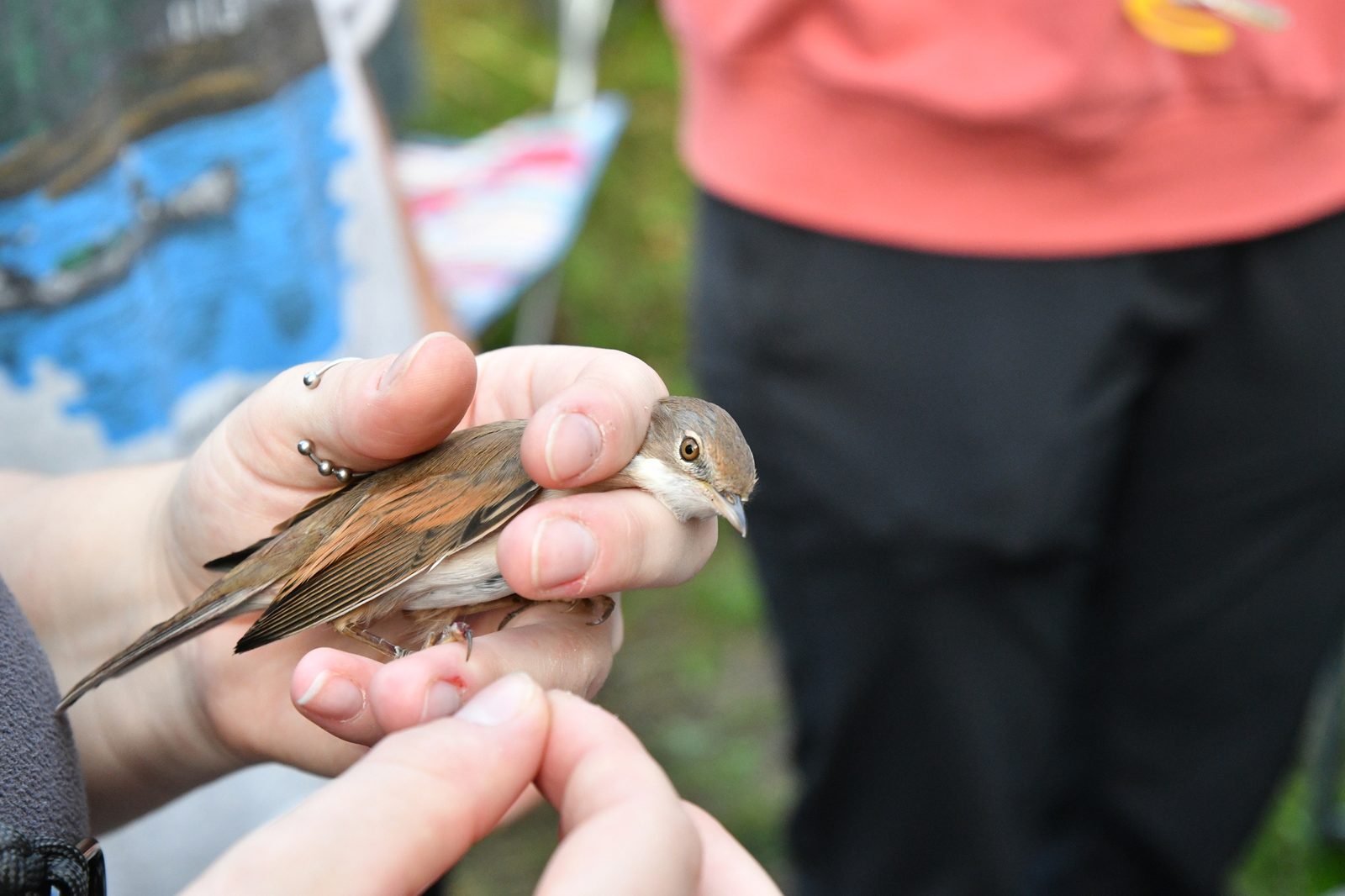
Photo: (c) Priya Sandhu, some rights reserved (CC BY) · CC-BY (May be cropped or resized)
Curruca communis
Conservation status: Unknown
Basic stats
Diet
Invertebrates and fruit
Habitat
Open country, cultivation, scrub and brambles
Range
Breeds in Europe and western Asia; winters in tropical Africa, Arabia and Pakistan
Clutch size
3–7 eggs
Weight
Averages about 15g
The Greater Whitethroat is a small migratory warbler with brown upperparts, buff underparts and chestnut-edged wing feathers. Adult males have a grey head and clean white throat; females lack the grey crown and have a duller throat. AVONET records an average mass of about 15 g and classifies the species as a strongly migratory shrubland invertivore (Wikipedia, general species account; AVONET, Tobias et al. 2022).
It breeds through Europe and much of temperate western Asia, then winters in tropical Africa, Arabia and Pakistan. Open country and cultivation with bushes, brambles or low scrub provide nesting habitat. Invertebrates contribute 60% and fruit 30% of the EltonTraits diet profile, with berries and other soft fruits taken seasonally. A low shrub nest holds three to seven eggs (Wikipedia, general species account; EltonTraits, Wilman et al. 2014).
Where to see Greater Whitethroat in Kenya
GBIF records grouped by protected area. They show where the species has been reported, not that it is there now, and they are not population counts.
Recorded in 42 protected areas (1973–2024). The 8 with the most records:
- Tsavo West National Park: 551 records (1976–2024)
- Nairobi National Park: 117 records (1992–2024)
- Samburu National Reserve: 53 records (1973–2024)
- Buffalo Springs National Reserve: 45 records (2005–2024)
- Tsavo East National Park: 35 records (1983–2024)
- Amboseli National Park: 31 records (1986–2024)
- Shaba National Reserve: 21 records (2012–2024)
- Sera Community Conservancy: 17 records (2018–2024)
Quick answers
- What does the Greater Whitethroat eat?
- Invertebrates and fruit
- What habitat does the Greater Whitethroat live in?
- Open country, cultivation, scrub and brambles
- Where is the Greater Whitethroat found?
- Breeds in Europe and western Asia; winters in tropical Africa, Arabia and Pakistan
- How many eggs does the Greater Whitethroat lay?
- 3–7 eggs
- How much does the Greater Whitethroat weigh?
- Averages about 15g