
 Wildlife
of Kenya
Greater Blue-eared Starling
Starlings & Oxpeckers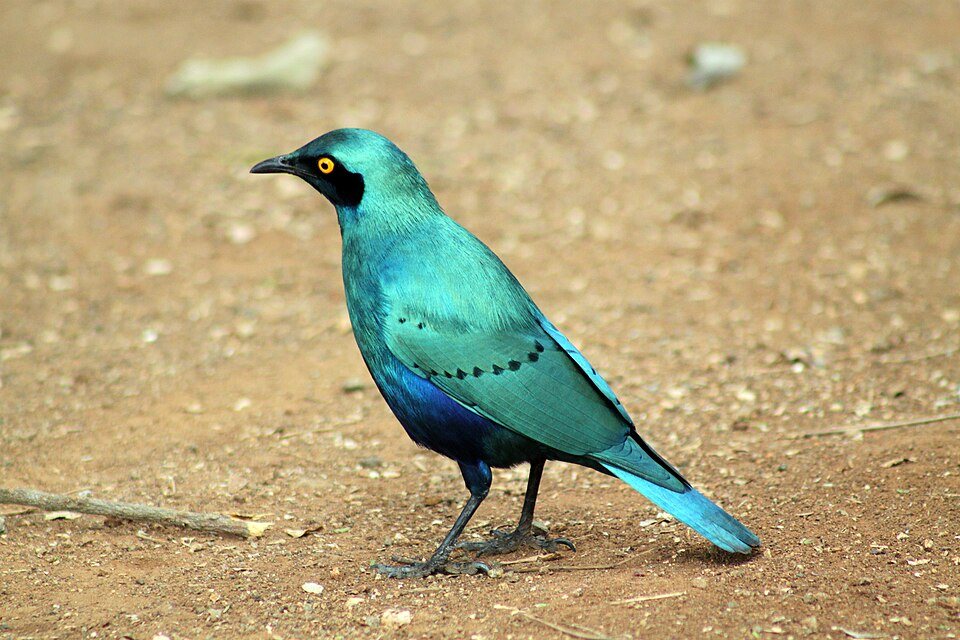
Photo: flowcomm · CC BY 2.0 (May be cropped or resized)
Lamprotornis chalybaeus
Conservation status: Unknown
Basic stats
Habitat
Woodland, bushveld and suburbs
Range
Senegal to eastern and southern Africa
Size
22cm
Known breeding populations extend from western Africa through Ethiopia, with southern limits in Angola and northeastern South Africa. It is an open-woodland bird and undertakes some seasonal movement. It is about 22 cm long. (Wikipedia, general species account; Collins Birds of the World)
The glossy blue-green bird has a purple-blue belly, blue ear patch and bright yellow or orange iris; the sexes look alike, while juveniles are duller with dark underparts. It eats insects, seeds and berries, especially figs, and may feed on insects disturbed by livestock. It nests in tree holes and lays three to five eggs. (Wikipedia, general species account)
Where to see Greater Blue-eared Starling in Kenya
GBIF records grouped by protected area. They show where the species has been reported, not that it is there now, and they are not population counts.
Recorded in 127 protected areas (1909–2026). The 8 with the most records:
- Masai Mara: 1,981 records (1972–2024)
- Lake Nakuru National Park: 1,802 records (1972–2026)
- Mpala Ranch: 966 records (2002–2026)
- Mara Triangle: 805 records (1974–2024)
- Ol Pejeta Conservancy: 608 records (1989–2026)
- Lewa Wildlife Conservancy: 445 records (1965–2025)
- Nairobi National Park: 282 records (1966–2026)
- Ol Jogi Conservancy: 250 records (2005–2026)
Quick answers
- What habitat does the Greater Blue-eared Starling live in?
- Woodland, bushveld and suburbs
- Where is the Greater Blue-eared Starling found?
- Senegal to eastern and southern Africa
- How big is the Greater Blue-eared Starling?
- 22cm