
 Wildlife
of Kenya
Fork-tailed Drongo
Crows, Drongos, Orioles & Shrikes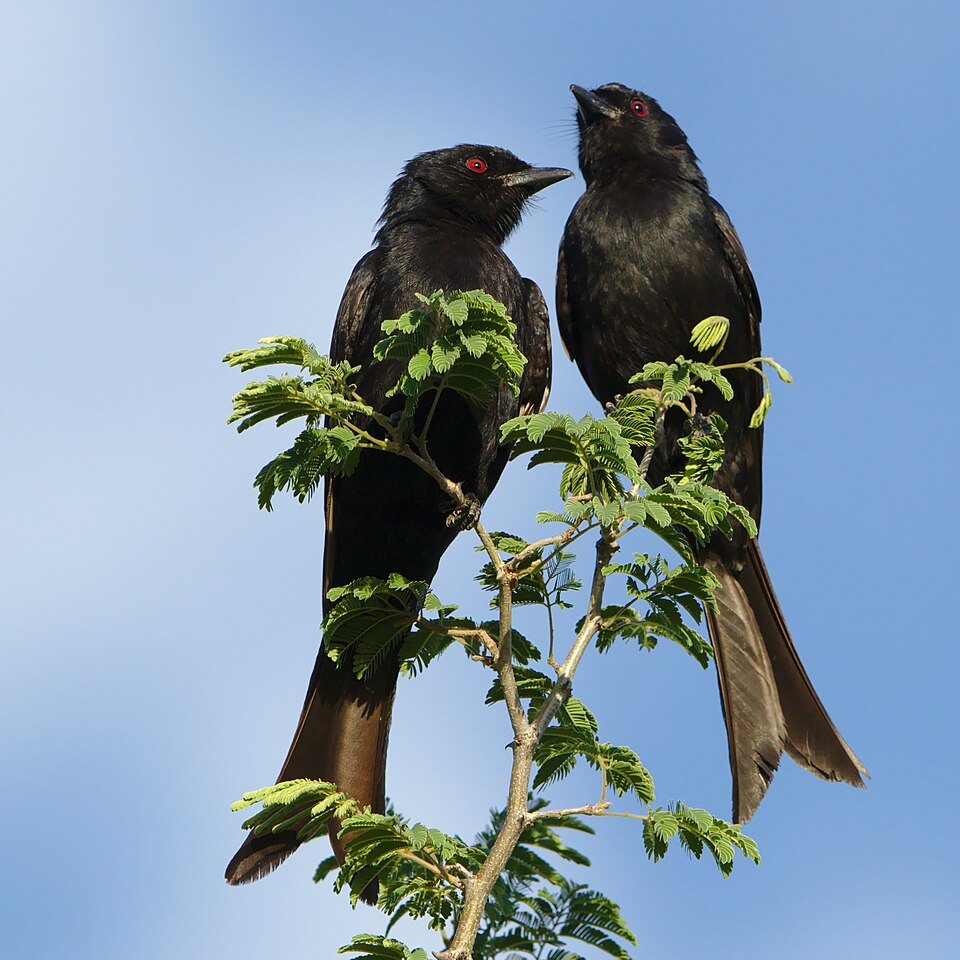
Photo: Derek Keats from Johannesburg, South Africa · CC BY 2.0 (May be cropped or resized)
Dicrurus adsimilis
Conservation status: Unknown
Basic stats
Diet
Insects, including butterflies, termites and grasshoppers
Habitat
Open woodland, savanna and forest edges
Range
Sub-Saharan Africa, from the Sahel to South Africa
Clutch size
1–4 eggs
Incubation period
15–18 days
The Fork-tailed Drongo, also called the Common or African Drongo, ranges from the Sahel to South Africa. It is a resident breeder across sub-Saharan Africa and occupies wooded habitats, especially open woodland, savanna and forest edges. The body is black with blue-green iridescence, and the narrow tail is deeply forked. Red-brown eyes and a robust black bill add to its distinctive appearance. (Wikipedia, general species account)
Its diet is mainly insects, including butterflies, termites and grasshoppers. The species mimics alarm calls to make other animals leave food, which it then steals, and it may attack much larger animals near its nest. Nests are placed near wetlands, forests and farms. Females lay one to four eggs, which hatch after 15 to 18 days. Its vocal repertoire includes varied calls and duets. (Wikipedia, general species account)
Where to see Fork-tailed Drongo in Kenya
GBIF records grouped by protected area. They show where the species has been reported, not that it is there now, and they are not population counts.
Recorded in 183 protected areas (1904–2026). The 8 with the most records:
- Masai Mara: 2,014 records (1973–2026)
- Lake Nakuru National Park: 1,675 records (1969–2026)
- Tsavo West National Park: 1,577 records (1966–2026)
- Arabuko-Sokoke Forest Reserve: 1,410 records (1967–2024)
- Nairobi National Park: 1,400 records (1970–2026)
- Buffalo Springs National Reserve: 1,299 records (1969–2026)
- Samburu National Reserve: 1,220 records (1970–2025)
- Mara Triangle: 952 records (1976–2026)
Quick answers
- What does the Fork-tailed Drongo eat?
- Insects, including butterflies, termites and grasshoppers
- What habitat does the Fork-tailed Drongo live in?
- Open woodland, savanna and forest edges
- Where is the Fork-tailed Drongo found?
- Sub-Saharan Africa, from the Sahel to South Africa
- How many eggs does the Fork-tailed Drongo lay?
- 1–4 eggs
- How long are the eggs of the Fork-tailed Drongo incubated?
- 15–18 days