
 Wildlife
of Kenya
Ethiopian White-eye
Cisticolas, Warblers & White-eyes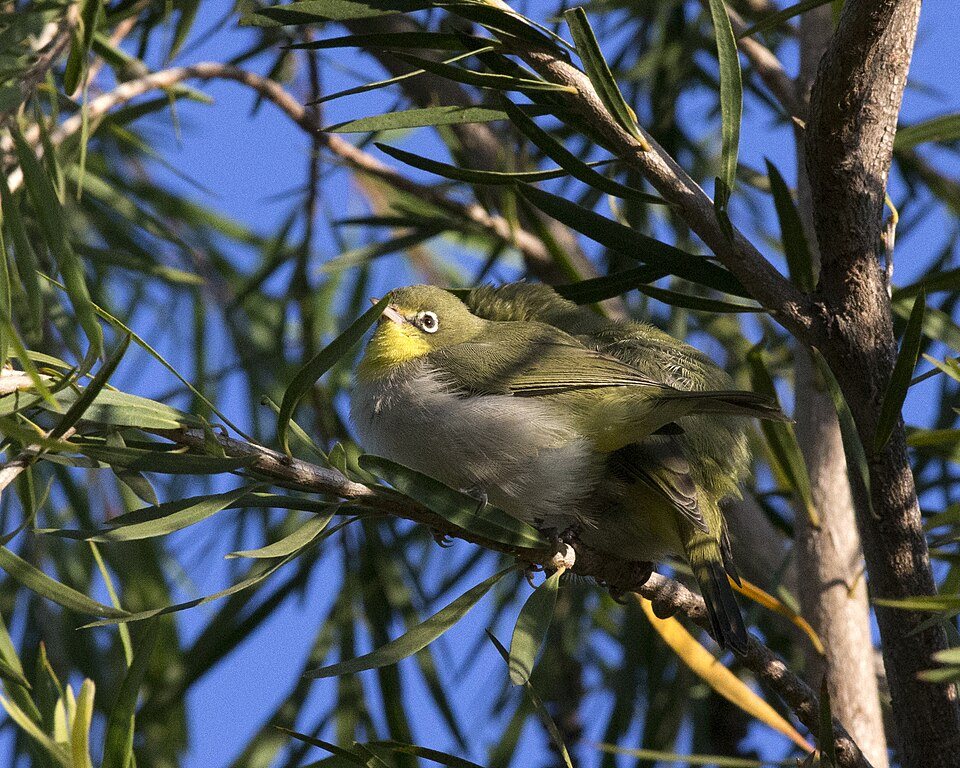
Photo: Lip Kee from Singapore, Republic of Singapore · CC BY-SA 2.0 (May be cropped or resized)
Zosterops poliogastrus
Conservation status: Unknown
Basic stats
Diet
Berries, insects and nectar
Habitat
Montane forest, high-altitude shrubland, plantations and gardens
Range
Ethiopian Highlands
Weight
11g
Ethiopian White-eye, formerly called Heuglin’s White-eye or Montane White-eye, is native to the Ethiopian Highlands. It occupies moist montane forest, high-altitude shrubland, plantations and rural gardens. Yellow covers the head and crown up to the white eye-ring, while a thin black line runs from the eye toward the bill. Lime-green flight feathers end in brownish-black tips, and the sexes look alike. (Wikipedia, general species account; Collins Birds of the World)
In the dry season, flocks can number as many as fifty; large groups are less evident during the wet season, except early and late in the day. Birds use woodland, forest edges and isolated cultivation, favoring younger growth and shorter trees between 1,340 and 3,640 m. They eat berries and small insects, and visit Leonotis flowers in September and November. The diet shifts seasonally, with more fruit in dry months and insects in wet months. Average mass is about 11 g. (Wikipedia, general species account; AVONET, Tobias et al. 2022; EltonTraits, Wilman et al. 2014)
Where to see Ethiopian White-eye in Kenya
GBIF records grouped by protected area. They show where the species has been reported, not that it is there now, and they are not population counts.
Recorded in 4 protected areas (2003–2018).
- Mount Kenya National Reserve: 9 records (2003–2018)
- Aberdare National Park: 5 records (2013–2017)
- Nairobi National Park: 4 records (2017–2018)
- Mount Kenya National Park: 3 records (2003–2017)
Quick answers
- What does the Ethiopian White-eye eat?
- Berries, insects and nectar
- What habitat does the Ethiopian White-eye live in?
- Montane forest, high-altitude shrubland, plantations and gardens
- Where is the Ethiopian White-eye found?
- Ethiopian Highlands
- How much does the Ethiopian White-eye weigh?
- 11g