
 Wildlife
of Kenya
Eryx colubrinus
Pythons & Boas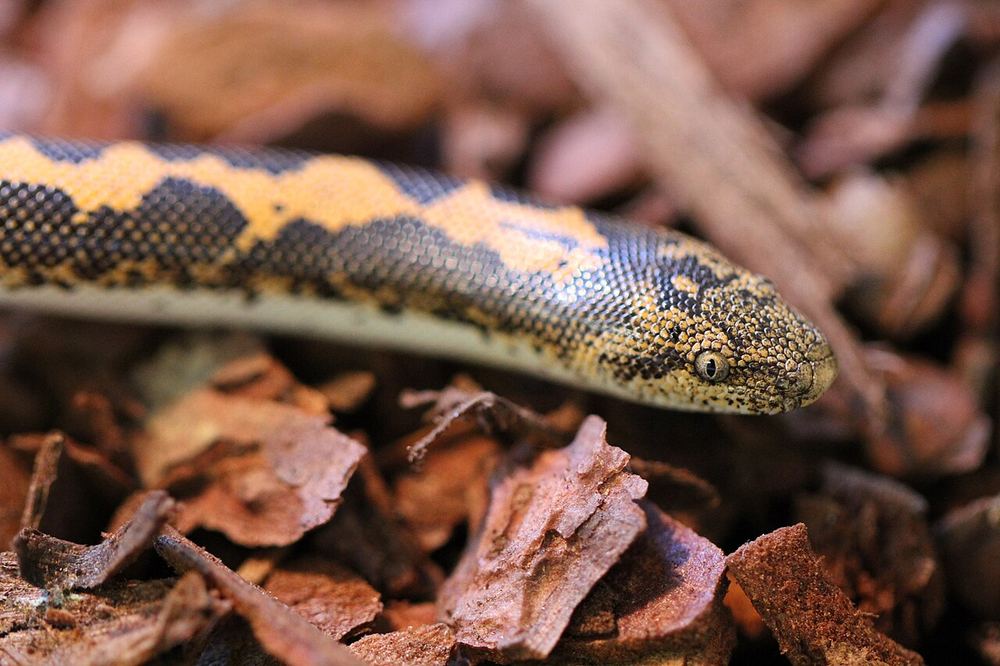
Photo: The Reptilarium · CC BY-SA 2.0 (May be cropped or resized)
Eryx colubrinus
Conservation status: Unknown
Basic stats
Diet
Small mammals, lizards and birds, caught by ambush and constriction
Habitat
Semi-desert, scrub savanna and rock outcrops with sandy, friable soil
Range
North and East Africa, from Egypt west to Niger and south to Kenya and northern Tanzania
Size
Typically 30 to 80cm; females rarely over 91cm
The Kenyan sand boa, also called the Egyptian or East African sand boa, is a heavily built snake with a small head, small eyes with vertical pupils and a short tail. The scales are extremely smooth except on the tail, which tapers to a keeled pattern. The colour is yellow or orange with dark brown splotches over a white or cream belly. Females are much larger than males and rarely exceed 91cm. Three subspecies are recognised. Its small size and docile nature make it common in the pet trade, with many colour morphs bred.
It lives in semi-desert, scrub savanna and rocky outcrops on sandy soil. It is mostly nocturnal but sometimes active by day, and is fossorial, spending about 80 per cent of its time underground. In heat it shelters under stones or in small-mammal burrows, and it occasionally climbs trees. It ambushes rodents, lizards and birds from under the sand and kills by constriction, and it gives birth to live young. It has lived 20.7 years in the AnAge record (Wikipedia, general species account; AnAge).
Quick answers
- What does the Eryx colubrinus eat?
- Small mammals, lizards and birds, caught by ambush and constriction
- What habitat does the Eryx colubrinus live in?
- Semi-desert, scrub savanna and rock outcrops with sandy, friable soil
- Where is the Eryx colubrinus found?
- North and East Africa, from Egypt west to Niger and south to Kenya and northern Tanzania
- How big is the Eryx colubrinus?
- Typically 30 to 80cm; females rarely over 91cm