
 Wildlife
of Kenya
Chinspot Batis
Other Songbirds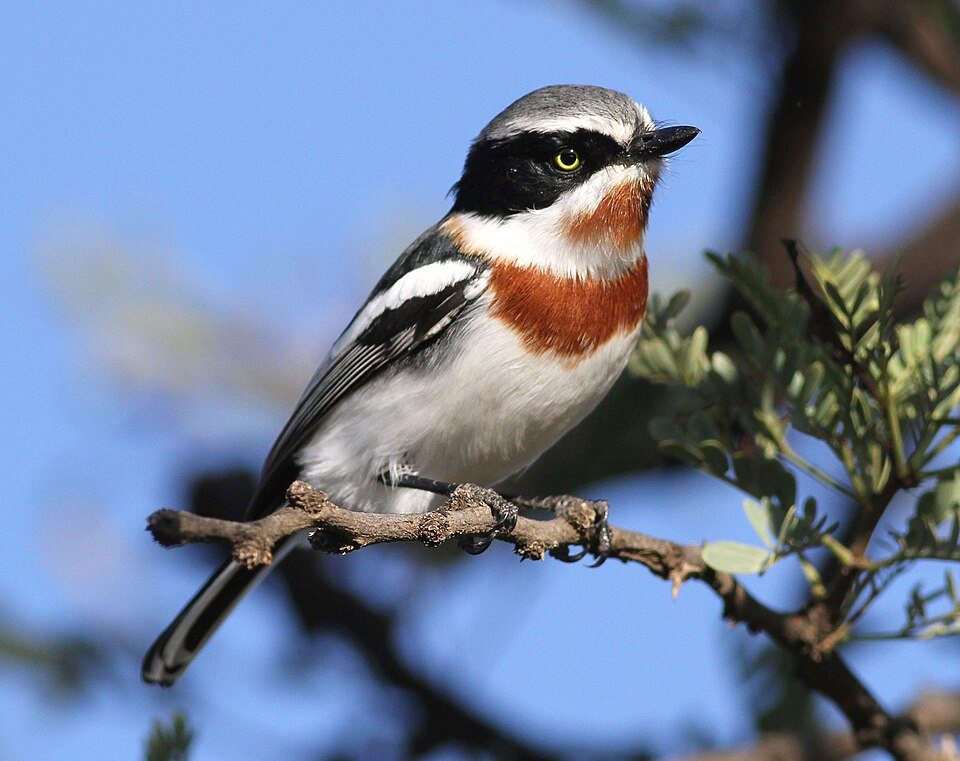
Photo: Derek Keats from Johannesburg, South Africa · CC BY 2.0 (May be cropped or resized)
Batis molitor
Conservation status: Unknown
Basic stats
Diet
Insects, larvae and spiders
Habitat
Savanna woodland, thicket and scrub
Range
Central and southern Africa
Clutch size
1–4 eggs
Incubation period
About 16–18 days
Size
About 12–13cm
Weight
Averages about 12g
Chinspot Batises are stout, 12–13 cm birds with grey upperparts, black masks, short white eyebrows, yellow eyes and white wing stripes. Males carry broad black breast bands, while females substitute chestnut bands and matching throat spots. Juveniles resemble females but show tawny markings, and average body mass is about 12 g (Wikipedia, general species account; AVONET, Tobias et al. 2022).
Across central and southern Africa, Chinspot Batises occupy deciduous savanna woodland, miombo, riverine thicket, scrub and cultivated parks or gardens up to about 3,000 m. They glean or hawk insects, larvae and spiders, often alone or in pairs. Both sexes build a lichen-covered fiber cup on a branch; females lay one to four eggs and incubate for about 16–18 days while both adults feed the young (Wikipedia, general species account).
Where to see Chinspot Batis in Kenya
GBIF records grouped by protected area. They show where the species has been reported, not that it is there now, and they are not population counts.
Recorded in 123 protected areas (1913–2026). The 8 with the most records:
- Nairobi National Park: 1,006 records (1973–2024)
- Masai Mara: 937 records (1973–2026)
- Mpala Ranch: 629 records (2000–2025)
- Mount Kenya National Reserve: 532 records (1977–2024)
- Lake Nakuru National Park: 504 records (1972–2024)
- Mara Triangle: 250 records (1981–2024)
- Aberdare National Park: 174 records (1981–2024)
- Soysambu Conservancy: 172 records (1992–2024)
Quick answers
- What does the Chinspot Batis eat?
- Insects, larvae and spiders
- What habitat does the Chinspot Batis live in?
- Savanna woodland, thicket and scrub
- Where is the Chinspot Batis found?
- Central and southern Africa
- How many eggs does the Chinspot Batis lay?
- 1–4 eggs
- How long are the eggs of the Chinspot Batis incubated?
- About 16–18 days
- How big is the Chinspot Batis?
- About 12–13cm
- How much does the Chinspot Batis weigh?
- Averages about 12g