
 Wildlife
of Kenya
Black-and-white Mannikin
Weavers, Waxbills & Whydahs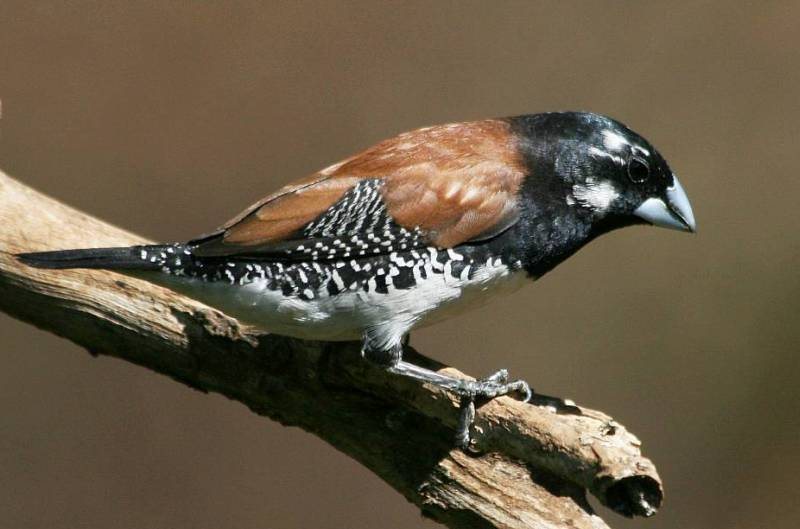
Photo: (c) Alan Manson, some rights reserved (CC BY) · CC-BY (May be cropped or resized)
Spermestes bicolor
Conservation status: Unknown
The black-and-white mannikin (Spermestes bicolor), also called the black-and-white munia or red-backed mannikin, is an estrildid finch widespread in sub-Saharan Africa. It inhabits humid savannas and moist lowland forests in subtropical or tropical regions. The bird eats seeds and is also known to feed on algae. (Wikipedia, general species account)
Louis Fraser, a British zoologist and collector, formally described the species in 1843. His specimen came from an area near Cape Palmas, Liberia. He assigned the bird to Amadina and coined the name Amadina bicolor. Today it is one of four species in Spermestes, a genus William Swainson established in 1837. (Wikipedia, general species account)
Where to see Black-and-white Mannikin in Kenya
GBIF records grouped by protected area. They show where the species has been reported, not that it is there now, and they are not population counts.
Recorded in 30 protected areas (1909–2026). The 8 with the most records:
- Mount Kenya National Reserve: 653 records (1985–2026)
- Kagamega Forest: 304 records (1972–2024)
- Arabuko-Sokoke Forest Reserve: 196 records (1968–2024)
- Nairobi National Park: 139 records (1973–2024)
- Shimba Hills National Reserve: 95 records (1973–2024)
- Watamu Marine National Park: 72 records (1970–2024)
- Masai Mara: 57 records (1977–2024)
- Saiwa Swamp National Park: 34 records (1980–2023)