
 Wildlife
of Kenya
Bat-eared Fox
Wild Dogs, Jackals & Foxes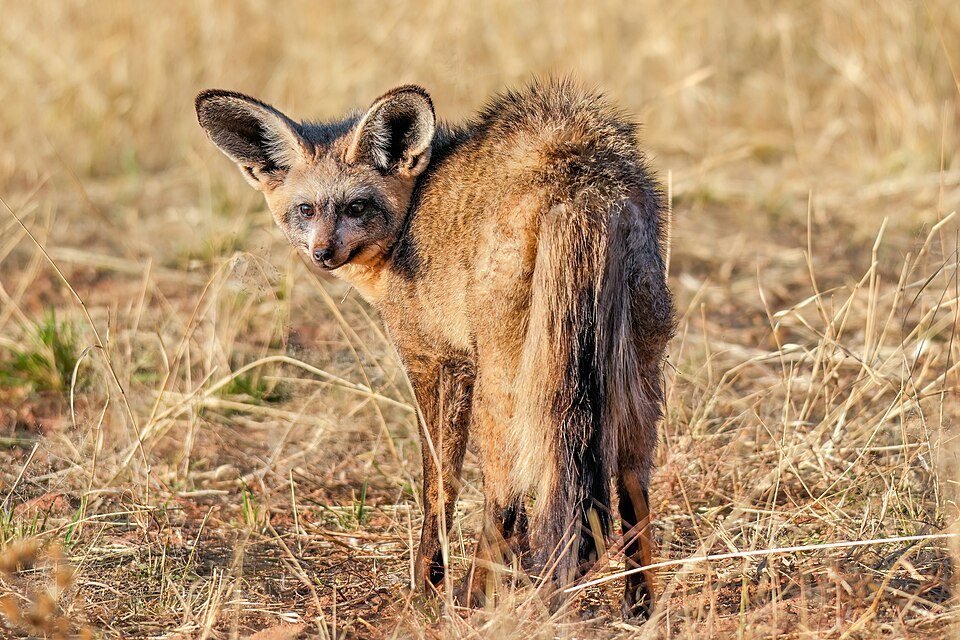
Photo: Giles Laurent · CC BY-SA 4.0 (May be cropped or resized)
Otocyon megalotis
Conservation status: Unknown
Basic stats
Diet
Mainly insects, especially harvester termites
Habitat
Short-grass plains, open scrub and semi-arid savanna
Range
Southern and East Africa
Litter size
1–6
Gestation period
60–75 days
Size
Head and body 46–66cm; shoulder height 30–40cm; ears 11–13cm
Weight
3–5.3kg
The bat-eared fox is a small canid of the African savanna and the only living member of its genus. It weighs 3 to 5.3kg, with a head and body length of 46–66cm, a shoulder height of 30–40cm and large ears of 11–13cm long, which help it shed heat. The pelage is generally tan with gray agouti guard hairs, the throat and underside are pale, the limbs are dark, and the muzzle, tail tip and facial mask are black. Females are generally larger and heavier than males. It occurs in southern and eastern Africa, in two populations about 1,000km apart (Wikipedia, general species account).
It eats mainly insects, which is unique among canids, and most of its diet is harvester termites, which also hydrate it. It locates prey by hearing, walking slowly with its nose down and ears forward. In southern Africa it lives in monogamous pairs with pups, and in eastern Africa in groups of a male and up to three related females. Pups are born from October to December after 60–75 days, in litters of one to six, in dens it digs or takes over. Males do most of the grooming, play and guarding (GBIF description, Canidae; Wikipedia, general species account).
Where to see Bat-eared Fox in Kenya
GBIF records grouped by protected area. They show where the species has been reported, not that it is there now, and they are not population counts.
Recorded in 5 protected areas (2003–2025).
- Masai Mara: 7 records (2003–2025)
- Mpala Ranch: 5 records (2019–2025)
- Amboseli National Park: 4 records (2019–2024)
- Mara North Conservancy: 3 records (2010–2019)
- Mara Triangle: 3 records (2014–2025)
Quick answers
- What does the Bat-eared Fox eat?
- Mainly insects, especially harvester termites
- What habitat does the Bat-eared Fox live in?
- Short-grass plains, open scrub and semi-arid savanna
- Where is the Bat-eared Fox found?
- Southern and East Africa
- What is the litter size of the Bat-eared Fox?
- 1–6
- How long is the gestation period of the Bat-eared Fox?
- 60–75 days
- How big is the Bat-eared Fox?
- Head and body 46–66cm; shoulder height 30–40cm; ears 11–13cm
- How much does the Bat-eared Fox weigh?
- 3–5.3kg