
 Wildlife
of Kenya
Amur Falcon
Raptors & Vultures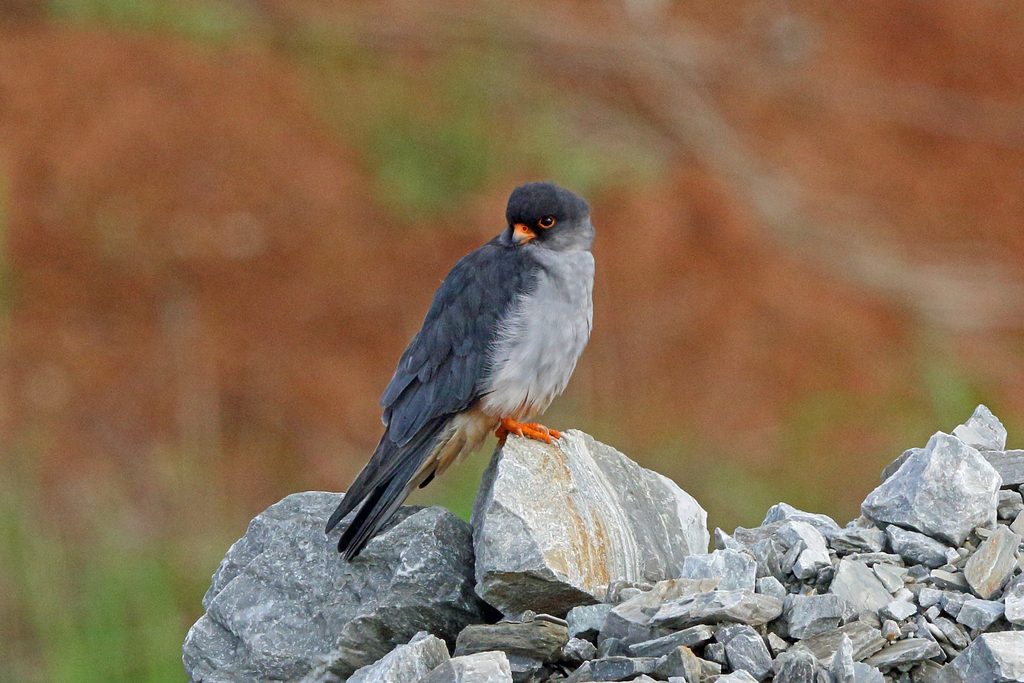
Photo: Nigel Voaden · CC BY 4.0 (May be cropped or resized)
Falco amurensis
Conservation status: Unknown
Basic stats
Diet
Mainly insects; small vertebrates are also taken while breeding
Habitat
Open woodland, marshy country and grassland
Range
Breeds in eastern Asia and winters in southern and eastern Africa, migrating through South Asia and across the Arabian Sea
Clutch size
3–4 eggs
Incubation period
About 1 month
Wingspan
63–71cm
Weight
Averages about 142g
The Amur Falcon is a small, long-winged falcon. Adult males are dark sooty grey with rufous thighs and vent and a pale underwing lining, while females have a more patterned plumage, orange eye-ring, red cere and reddish-orange feet. Juveniles resemble young Red-footed Falcons but lack their buff underwing coverts. The wings span 63–71 cm, and the species averages about 142 g (Wikipedia, general species account; AVONET, Tobias et al. 2022).
This far-ranging migrant breeds in eastern Asia, travels through South Asia and crosses the Arabian Sea to winter in southern and eastern Africa. Open woodland, marshy country and grassland are used during different parts of the cycle, and large communal roosts form on migration. Insects are usually caught in the air or picked from the ground; small vertebrates supplement the breeding diet. Pairs reuse corvid or raptor nests and sometimes tree hollows. Three or four eggs hatch after roughly a month of shared incubation (Wikipedia, general species account; EltonTraits, Wilman et al. 2014).
Where to see Amur Falcon in Kenya
GBIF records grouped by protected area. They show where the species has been reported, not that it is there now, and they are not population counts.
Recorded in 19 protected areas (1981–2024). The 8 with the most records:
- Tsavo West National Park: 150 records (1984–2024)
- Tsavo East National Park: 27 records (1993–2024)
- Nairobi National Park: 24 records (1985–2023)
- Masai Mara: 23 records (2015–2024)
- Amboseli National Park: 22 records (1981–2024)
- Samburu National Reserve: 15 records (2019–2024)
- Meru National Park: 10 records (2011–2024)
- Buffalo Springs National Reserve: 9 records (2019–2024)
Quick answers
- What does the Amur Falcon eat?
- Mainly insects; small vertebrates are also taken while breeding
- What habitat does the Amur Falcon live in?
- Open woodland, marshy country and grassland
- Where is the Amur Falcon found?
- Breeds in eastern Asia and winters in southern and eastern Africa, migrating through South Asia and across the Arabian Sea
- How many eggs does the Amur Falcon lay?
- 3–4 eggs
- How long are the eggs of the Amur Falcon incubated?
- About 1 month
- What is the wingspan of the Amur Falcon?
- 63–71cm
- How much does the Amur Falcon weigh?
- Averages about 142g