
 Wildlife
of Kenya
African Yellow-Warbler
Cisticolas, Warblers & White-eyes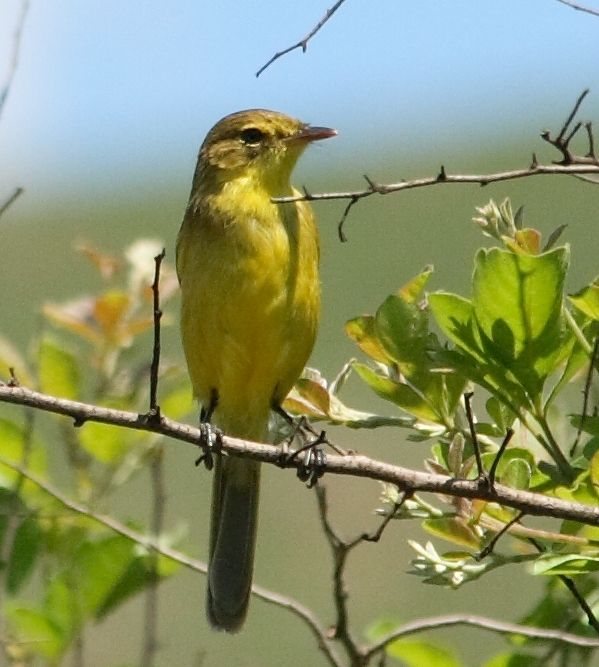
Photo: Alan Manson · CC BY-SA 2.0 (May be cropped or resized)
Iduna natalensis
Conservation status: Unknown
Basic stats
Habitat
Reeds, waterside growth and forest edges
Range
Sub-Saharan Africa
Size
13cm
Also called the Natal Yellow-Warbler, Dark-capped Yellow-Warbler and Yellow Flycatcher-Warbler, the African Yellow-Warbler has yellowish-brown upperparts and tail, a browner crown and a yellower rump. The underparts are bright yellow, washed olive along the sides and flanks. Females are duller below, and juveniles are buffier than males. (Wikipedia, general species account)
Its haunts include reedbeds, lush growth beside water and woodland margins, particularly where moist vegetation adjoins them. Foraging takes place low among vegetation; it gleans caterpillars and other prey from leaves and branches, and also catches flying termites from a perch. Its cup nest sits among stems or in a bush, and two or three eggs are laid in southern Africa from September to March. (Wikipedia, general species account)
Where to see African Yellow-Warbler in Kenya
GBIF records grouped by protected area. They show where the species has been reported, not that it is there now, and they are not population counts.
Recorded in 7 protected areas (1972–2024).
- Nairobi National Park: 608 records (1973–2024)
- Kagamega Forest: 19 records (1972–2019)
- Saiwa Swamp National Park: 11 records (1989–2022)
- Kitengela triangle unformal conservation area: 10 records (1999–2024)
- Aberdare National Park: 9 records (2015–2024)
- Mount Kenya National Reserve: 9 records (1993–2024)
- Silole Conservancy: 5 records (1978–2017)
Quick answers
- What habitat does the African Yellow-Warbler live in?
- Reeds, waterside growth and forest edges
- Where is the African Yellow-Warbler found?
- Sub-Saharan Africa
- How big is the African Yellow-Warbler?
- 13cm